Author Archives: Michael Bach

BACH.Bogen 25

01 BACHBogen 25

Germany

Die Entwicklung des Rundbogens für Streichinstrumente
(1989 – 2013)

Präsentation mit Michael Bach im KlangRaum Stuttgart
am 01. Dezember 2013


Transkription des Vortrags:
http://www.bach-bogen.de/blog/thecelloupgrade/25-jahre-bach-bogen

Am „Vorabend” des 25-jährigen Jubiläums des BACH.Bogen möchte ich das künstlerische Anliegen und die „Idee” des Rundbogens einmal anhand authentischer Quellen aufzeigen. Dies ist bislang noch nicht geschehen. Denn, der Zeitpunkt ist erst jetzt gekommen, da im Wesentlichen die Entwicklung des BACH.Bogen für Cello und Violine mit diesem Jahr als abgeschlossen gelten kann.

Ausgehend von der zeitgenössischen Musikproduktion rückten die Solowerke für das Cello und für die Violine von J. S. Bach immer mehr in den Fokus, so daß speziell für das ein- und mehrstimmige Spiel ein flacher Rundbogen konzipiert wurde. Das hochgewölbte Modell ist, wegen seiner kompromisslosen vierstimmigen Spielweise, Inspirationsquelle für heutige Komponisten. Sogar einige Werke Paganinis, die vierstimmig für die Geige komponiert sind, habe ich dem Dornröschenschlaf entrissen und erstmals mit dem Rundbogen auf dem Cello wieder aufgeführt.

Anhand einiger der realisierten Rundbogenmodelle (ca. 50 Prototypen) möchte ich die geistig-sinnlichen Aspekte herausarbeiten, die zu den neuen Kompositionen führten. Ein perfektes Instrument gibt es nicht, es bleibt immer ein vermittelndes Produkt. John Cage sagte mir einmal in New York beim Abschied, nachdem wir an ONE8 1) eine Woche lang gearbeitet hatten, „As Marcel Duchamp would have said, The worse the cello, the better the cellist has to be…’” 2) Ich widersprach damals mit „The better the cello, the better the cellist has to be…3)   Beides stimmt auf seine Art.

Le violon, c’est l’archet4) , dieser bekannte Ausspruch von Viotti, der, wie sein Lehrer Tartini, wichtige Beiträge zur Violintechnik beisteuerte, richtet das Augenmerk auf den Bogen. Von Tartini berichtet E. T. A. Hoffmann in einer Novelle 5) , daß dieser einen Rundbogen besaß: „… solchen Bogen führte der große unsterbliche Tartini“. Die Streichbögen, welche J. S. Bach besaß, kennen wir leider nicht.

Die Entwicklung des BACH.Bogen war ein gewundener Weg nach dem Prinzip trial and error und zeigt die physischen Bedingungen und physikalischen Funktionsweisen der Instrumentaltechnik auf, und zwar beide Hände betreffend. Der heute gebräuchliche gerade, genauer gesagt konkave Bogen kann von übergeordneter Warte aus als ein Sonderfall des Streichbogens gelten, der, zugunsten einer einfacheren Handhabe, einerseits einige Stricharten optimierte, andererseits die vielfältigeren Ausdrucksmöglichkeiten, so wie sie zu J. S. Bachs Zeiten noch gang und gäbe waren, limitierte.

Michael Bach

1) ONE8 (1991) für Cello mit Rundbogen

2) „Wie Marcel Duchamp gesagt hätte: Je schlechter das Cello, um so besser muß der Cellist sein.”

3Je besser das Cello, um so besser muß der Cellist sein.”

4)  Die Violine, ist der Bogen.”

5)   Musikalische Novellen und Schriften, „Der Schüler Tartinis


Urtext = Plain Text? – An Analysis of the Prélude in G Major, Part 3 (Measures 19-30)

Britain

This is a translation of the post „Urtext = Klartext? “, November 6, 2013
by Dr. Marshall Tuttle.


Michael Bach

This is the third part of my presentation transcription
Urtext = Klartext?

of 4 May 2013 at the Foundation Domnick Nürtingen near Stuttgart


Note:
It is helpful to open a second browser window with the blog post “The slurs in the Prelude of the Suite in G Major for Solo Cello ”
https://www.bach-bogen.de/blog/thebachupdate/die-bindebogen-im-prelude-der-suite-in-g-dur
in order to have the score visible.

Glossary:

JSB = Johann Sebastian Bach
AMB = Anna Magdalena Bach
2-slur, 3-slur, 4-slur = slurs over 2, 3 or 4 notes
1. Zz = 1st beat of a measure
c4 = c ‘ (middle C)
DD = dominant of the dominant
D7 chord = dominant seventh chord
D9 chord = dominant ninth chord

The terms “Master tone” and “Servant tone” are borrowed from Thomas Mann ‘s novel Doctor Faustus. They distinguish between chord tones and non-chord such as passing notes. For details see Part 1 of the analysis.


 [plays measure 19]

Here again the F#2 that leads further into the depths … now the C#2, a 3-slur …
[plays further to the end of measure 20 and then plays the possible resolution to D major]
I have now played the resolution of this dissonant chord, but that does not happen here…
I have played it to clarify why a slur is “missing” here. A slur…
[plays the beginning of measure 20]
… is on the note A2 (3-slur), emphasizes the seventh of the DD7–chord, and then no slur comes in the second half of the measure (in the repetition of the motive) …
[plays second half of measure]
… this is an attenuation (relaxation) … and is not followed by the expected resolution …
[plays D major triad]
… but, rather than resolving the C#2 up a semitone (resolution to the dominant) JSB now resolves a semitone lower …
[plays C#2 and then C2]
This is the seventh of the chord (D major), which was actually required. The fact that JSB places no slur in the second half of measure 20 means that first of all he wants us to believe that a resolution will follow.
The Urtext editions, naturally, “normalize” the bowing in the second half of measure 20.
Note:
What would JSB have to have  done to make it unmistakably clear that he wanted no repeat of the 3-slur? Write a note in the score: “This is not a slur?” The same applies to measures 3, 8, 24, and 39-41, in which the Urtext editions usually add complementary slurs.

But now in bar 21 all the slurs are in their places:
[plays the beginning of measure 21]
Again, it is the central A2, which receives the 3-slur. That’s something like a pedal point. The third F#3 is emphasized:
[plays measures 21 and 22 to the fermata]
Yes, it is always on that note A2 that the slurs form something like a pedal point. It is the only pitch that belongs to both harmonies (dominant and DD) …

[plays measures 20 and 21]

…which is identical.
What happens next is very special, in the measure with the fermata (measure 22) …
[plays half of measure 22]
04
… this C#4, because it does not fit here. We have here a D7-chord, so:
[plays the D7-chord]
… which would have to resolve to G major:
[plays chord of G major]
But JSB “tinkers” here with the pure C#4. And the question arises: What is it doing here? Is there a Master tone or a Servant tone? So you might also suspect that he now brings back the secondary dominant here:
[plays the DD7-chord with C#4 and the dominant chord as a resolution]
But we are already in the dominant (bar 21), then a brief secondary dominant … (16th note C#4 in measure 22) and then again the dominant (d4 with fermata) – that makes little sense, this effort here is not worth it. Moreover, the period of time (only a 16th note C#4) is also too short to insert here a perceptible secondary dominant harmony. And: The C#4 is connected by a slur (i. e. unstressed). We have a slur here …
[plays beat 2 of measure 22]
… even the D4 is still slurred. That is, JSB here creates an irritation with this half step C#4, and this passage ends as a question.Many artists see things differently and think that you could place an ornament on the note C#4:

[plays second beat measure 22 with a mordant on the note C#4 and emphasizes the top note D4 with a downbow]

… and play D4 as a conclusion. With an ornament the note C#4 would be repeated at least once. But in my opinion the C#4 really appears only in “passing”, so to speak “en passant”. It should not be significantly accentuated because it moves straight on: [plays the first three 16th notes after the fermata]… and again we have a C3. We are still on the D7-chord:[plays the D7-chord]… and do not leave it.This C#4 is a type of a melodic element, which later in the movement (chromatics), comes to a grand effect.
Note:
Following the seminar, the audience had the opportunity to ask questions. This measure was again taken up and alternative versions of the pitch C#4 were demonstrated.
There is something special, and that is that we have two slurs that follow one another directly. In my interpretation this means, as is usually the case with slurs …
[plays the first slur in measure 22 and the subsequent note A3]
… the following note is emphasized. It also means that a decrescendo takes place in the second beat.
[plays second beat of measure 22]
That is, the D4 …
[plays D4, the highest note of measure 22]
… will not be emphasized as a completion. Rather, this note is appended. So, if two slurs follow each other, it usually has the result that the second slur gets an accent and a decrescendo, grows quieter as it proceeds. We have another example in this movement confirming this.
One more point: many analysts see here the conclusion of the first part of the Prélude and think the second half of the movement begins here. But, this is not so. The second half begins of course …
[plays the beginning of measure 19]
… with this tonic, and leads to these two harmonies that extended into the second half.
Note:
Concerning the two bass notes C#2 and C2 of bars 20 and 21: These two pitches clearly separate two harmonies: C#2 as a third of the DD and C2 as seventh of the dominant. Both the continuous exchange between C4 and C#4 and the double pedal D2-A2 are characteristic of the second half of the movement.
We always have the continuous pedal point D2 and A2:[plays the fifth D2-A2]D2 is the root of the dominant chord and A2 is the root of the DD (where it is also heard as fifth of the dominant). And so it continues in measure 22 (after the fermata) beginning with A2:
[plays the ascending scale of measure 22 beginning with A2 – through the beginning of measure 24]Here there are no slurs, why? Because the harmony is clear here. There is no doubt it is all in with the dominant sevenths. But what now occurring in the next measure:

[plays measure 24 with upbeat D4]
… for the first time a chromatic expansion of the pitch space, namely the Eb4, the ninth of the dominant chord:

[plays the dominant chord tones and emphasizes the seventh, C4 and the ninth Eb4]

… seventh, ninth, so this is a little tone space extension. So now we have landed on the ninth, one notices this chromatic play around the central D4, which was the highest note so far, …

[plays first and second beats of measure 24]

… this temporary horror JSB has gotten himself into, that he has now exceeded his pitch space, so that he quite “anxiously” plays around the central D4, and then …
[continues to play until the end of measure 24]
… he returns straightaway back to safe ground, the root:
[continues to play until the second beat of measure 25]
This is the dominant, which resolves  …
[continues to play until the end of measure 25]
… to a short lived tonic. But this is not a full resolution (the dominant in the bass makes this a second inversion chord which is technically dissonant) but that will cause primarily something, namely:
[plays measure 26 and emphasizes notes G3 and C#4]
The note G3 and the note C#4:
[plays G3 and C#4 first, then the second half of the measure]
This of course makes the DD tritone interval clear to us. JSB now places a 2-slur on the note B3, by which means the following Bb3 is emphasized. We are there for a moment in an unsecured harmonic space because the DD that we have here:
[plays the DD9-chord]
… has the note Bb3 as ninth, which resolves gradually to A3. But here we have first a B3, although that is a diatonic pitch:
[plays the scale of A Major]

… melodically so “right”, but harmonically so “wrong” if you will. And therefore JSB places a 2-slur on the note B3, so that you can hear it clearly.

Note:
This conflict between B3 and Bb3 is particularly dissonant and expressive.

The Urtext editions make it a 3-B:[plays the version of the Urtext editions with a 3-B on the rating C#4]
Note:
This makes the note B2 an unstressed Servant tone of the DD which weakens the dissonance of the chromatic sequence. Some editions even still change the note B3 into Bb3:
[plays C#4-B3-A3-B3]
Thus harmonically “all clear” since there is no irritation.However in this version:

[plays C#4 B3-A3-B3]

Note:
A curious aside: Using the pitch C4 instead of C#4 JSB could have quoted the letters of his name CHAB.
But the harmonic irritation resulting from C#4, B3 and Bb3 was more important than the name quote.
So here are 2-slurs:
[plays second half of measure 26 with the 2-slurs on the notes B3 and A3]
As I said, this will stress the notes A3 and B3, and now the seventh G3:

[continues to play until the end of measure 27 with a 3-slur on G3 in the first beat]

Note:
Remaining unmentioned in this lecture are the stabilizing 3-slurs in measure 25 on the note A2, in measure 26 on the note G2, and in measure 27 on the note C#3, which accentuate the root of the DD, the tonic, and the third of the DD respectively. The resolution to the tonic in bar 26 causes a strengthening of the tonic G3, but reinterpreted as the seventh of the DD.

Now the C#4, which was introduced just prior to the fermata, appears last or the second to last time, because it is repeated as leading tone (and changing note) to D4.
[plays C#4-D4-C#4-D4]
We have now quite clearly landed in D Major:
[plays measure 28 to the note D2]
So, this is again the pedal D2 [pause].

I would suggest now, I am indeed “in good shape” [laughter], but it will again be here quite a “chunk” that must be broken, and that now would be a little too much, I think we need about half an hour, until we are at the end at least. I would like to take a short break [applause].


[after the pause]

I must backtrack a little, I have worked all the while without a script. A little more about the last two points, which we have heard. The Urtext editions are alike in the way they equalize the two measures.

[first, plays the preparatory measure 23]

The Urtext editions make it a 3-slur:

[plays measure 24, with 3-slurs on the notes of the first beat Eb4, and the second beat D4]

… and also:

[plays measure 26, each with a 3-slur on the notes of the third beat C#4, and the fourth beat, Bb3]

This is of course not there. Why? Although the measures are very similar, they both go back to this fermata:

[plays second beat of measure 22]

… where this chromaticism was already indicated. But everything happens in measure 24 in a harmonically secure context:

[plays the beginning of measure 24]

It takes only a very small extension of the pitch space up to the ninth, no more. Meanwhile, in this measure:[plays third and fourth beats of measure 26]

… for a moment the harmony is destabilized. Therefore, this is the reason for the slurs on those notes.

Now we come to a point – and I ‘m trying to keep myself a little more to the manuscript – where only the articulation … puts us on the track of determining which harmony is intended.
   
The fact is, we have for the first time 4 long slurs, which is exceptional. And, well, I’ll play first of all my version:
[plays measure 29 until the beginning of measure 31]
This is how this passage sounds.
05
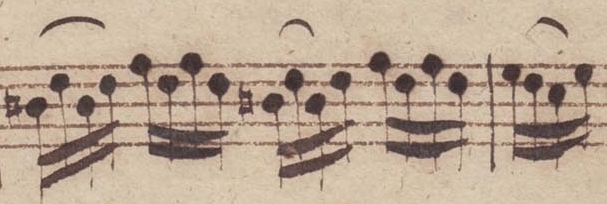
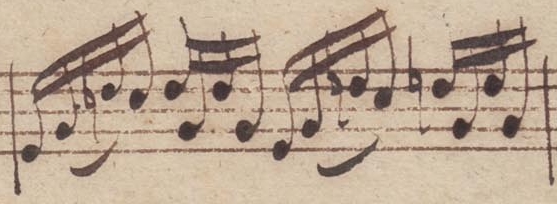
In this passage of 2 measures one would initially think AMB had prescribed three or four times … that the slurs should actually all be the same. So the end of these slurs is always unique. As for the last, since AMB has forgotten to complete the slur on the next line. This is clearly so, because at the end of the line above the slur is quite far out the staff. But it does not continue on the next line. So, that slur is open as to where it ends, but the other 3 slurs always end at the end of the 2nd or 4th beats [see below].
Well, what do we have here? We have a scale. Which could also sound like this if it were not broken by JSB (by means of octave displacements), it would have sounded like this:
[plays measure 29ff starting with the bass note D2 and then a descending scale starting with the top rating C7]
So you see, this is a huge “mountain”. But because this is a scale, you can not detect Master tones or Servant tones. That is, the harmony remains unclear. And because this is so, one might say, then why should there be slurs?I play the initial organ point D2 once with:
[plays measure 29 détaché, wherein in the first half measure the note D3 is heard as a second voice, and adheres to the succeeding measure]


You could also leave out the slurs. But slurs always have to mean something in JSB. So I return to search out the harmonic reasons.It is obvious that this peak pitch:

[plays the first three 16th notes of the first and thirds beats of measure 29f]

… so the pitch after the large interval resolves, for example, the Seventh C4 resolves to B3. And so I considered different harmonizations. First, it looks as if we have the following:

[playing double stops F#3-C4, followed by thirds G3-B, F#3-A3, E3-G3 and D3-F#3]

This is a simple harmonic progression of the D7-chord on the tonic, dominant and submediant to the dominant.

But it could also sound like this:

[plays the second half of measure 29 to the first beat of measure 31, each with a chord on the third 16th note of the first and third beats: first, the tonic chord, then the subdominant chord of the relative minor, then the relative minor and then the dominant chord]

Therein is the relative minor contained, and in the last example also the subdominant of the relative minor. That already appeared in the first Part of the Prélude (measure 12), A minor as a precursor to E minor.Or, it could go like this:
[plays the tritone F#3-C4, then G3-B3, C3-E3, F#3-A3, B2-D3, E3G3, A2-C3 and D3-F#3]
This is basically not much different.However, this means that we actually have a resolution exactly on the third 16th note, like this:
[plays out and amends the resolution to the tonic chord, subdominant of the relative minor, relative minor and dominant, respectively, on the third 16th note of the first and third beats of measures 29ff.]
… which means that the slur would always start there. This would mean that:
[plays measure 29ff, the long slurs beginning always on the third 16th note of the first and third beats]
Note:
Suspensions are not usually slurred to their resolutions in the Suites.
I was actually quite happy with this solution … that sounds conclusive, convincing, plausible … only that was then too simplistic and song-like for me. So, it is not so, because I could not live with errors in the AMB copy. But I thought for artistic reasons: “It’s probably not, because: why such a simple chord progression after all the chromatic ramifications? JSB will not return to it.” It was clear to me.
I continued searching, and … even so because there is still a … Yes ! So … as I have just set the slurs, that would be a correction of the manuscript. Only the 2nd slur of AMB …
[plays second half of measure 29]  …corresponds to this schema. The third slur no longer corresponds:[plays measure 30 with both slurs, each of which begins only in the fourth and not the third 16th note]Since the slurs put a 16th note later. It ‘s like this: the last slur is incomplete because it was beginning on the fourth 16th note and no longer continuing on to the next line:

[demonstrates with four fingers of the left hand, which should represent the four 16th notes, and indicates the slur, starting with the 4th Finger in the air]But you can see, AMB has again prescribed. She forgot a note. She has inserted a note between the first two 16th notes later and has erased the last note (fourth 16th note) so that one might think that she has forgotten the slur that first came to rest on the third note, to move a 16th note forward. She forgot to correct that slur, and the continuation of the slur on the next line she also forgot. So, the slur simply leads nowhere.
[demonstrates with hands]
So, naturally, this slur would be moved forward a 16th note.
The previous slur (measure 30, first beat) unfortunately begins on the fourth 16th note. It appears as though that slur just begins straight (horizontal, without curvature)  and underneath there is a shorter stroke that seems to be failed, because the ink has run out or anything else happened. This upper slur is not notated down to the note head, but begins horizontally. Then, it is plausible that the beginning of this slur is not precisely indicated, because the ink flow was not working. So here we extended this slur forward and down to the third 16th note. And thus “the world is in order.”
As regards the first slur (measure 29, first beat) since AMB has definitely prescribed it, or it looks as if she has extended it because it begins like this:
[plays measure 29 with a single long slur starting on the note B3]

So, because we have a D2 8th note here actually on the fourth 16th note.Or it looks like that she wrote a 2-slur, and then a 4-slur:

[plays a 2-slur on the note B3 and a 4-slur on the note A3]

But now we can not stop a slur at just one note (A3) and have a second start. Either that is an extension of the 4-slur to the front or the 2-slur has slipped to a 16th note to the rear.

The latter seems to me to be the most plausible at this point because we have the same pitches in the same measure (second half measure) yet again:

[plays measure 29 with a 2-slur on the note C4, 4-slur on the note A3 and the subsequent long slur starting on the B3 of the third beat]

A second resolution to G major in this measure really makes no sense:

[plays measure 29 with 2 long slurs, starting on the two notes B3, each backed by a G major chord]

That makes no sense, if one thinks harmonically.

So I have come to the conclusion that there is a 2-slur. As a consequence – think of the fermata, where two slurs follow each other – the second slur starts strong and decrescendos, so that the resolution to the tonic (third beat) can actually happen relaxed, and that makes sense for me:
[plays measure 29 again with the 3 slurs]
So, the first slur would be clarified thus far. Now, what about the last two? I must ever recall how I got it … Yes! I have indeed played this scale. And that is clear, it is composed of the following thirds:
[plays melody consisting of C4 – A3 – F#3 – D3 – B2 – G2 – E2 – C4 – E3 … etc.]
What are these harmonies ? We have the D7-chord:
[plays D3 – F#3 – A3 – C4]
That resolves into the tonic :

[plays G2 – B2 – D3]

And then the relative minor:

[plays E2 – G2 – B2]

In other words, let us assume at this point again that we are on the D7-chord in bar 29 which resolves to the tonic, an assumption that clearly agrees with the slurs quite well, and then the relative minor appears.

[plays measure 30 with the chord of the relative minor on the fourth 16th note G3]

… and here already the dominant, which often follows the relative minor:

[plays second half of measure 30 with the chord of the dominant on the fourth 16th note F#3]

… and then the dominant in bar 31 is maintained.

Actually in other words, the penultimate slur of this passage in measure 30 starts on the fourth 16th note, on the G3, which is the third of the relative minor:

[plays measure 30 again starting with the slur on the note G3, supported by the chord of the relative minor]

… and then the dominant:

[plays second half of measure 30 starting with the slur on the note F#3, supported by the chord of the dominant]

Now this is very unusual, a slur with an emphasis on the fourth 16th note of a beat, so that’s really the weakest part of the beat. And that is difficult to accept. But if you understand that with this scale, with these slurs, JSB “proffers” the relative minor which played such an important role in the first half of the movement again, so completely unnoticed … by means of scales, not harmonies, i. e. executed melody leads to the relative minor, then you also accept that one “gets out of synch” here. That there is a point here, which opens both metrically and harmonically and releases itself in the “empty space”. And so it is here.

Note:
The bass note in measure 30, C3 is unusally emphasized here. It functions as a derivative action (Servant tone) for the B2 bass note of the 3rd beat (and less than the dominant sevenths, which would be a Master tone). Referring again to the slur in the AMB copy, as is striking that this slur decidedly does not stop on the last note in measure 29 F3, but is drawn out and  points to the note C3 of the succeeding measure. It stands to reason, therefore, to assume that the initial note C3 of measure 30 is bound to the preceding notes of measure 29.

In this case, the high note B3 emphasizes the resolution, which is the fifth of the relative minor. Also, you can see the high note of the third beat A3 already indicating the dominant. Consequently, then both top pitches on the second 16th note of the first and third beats accentuate, as I said, their fourth 16th note.

With the slurring of the bass note C3 definite indication of A minor, the subdominant of the relative minor is excluded (see above
). This interpretation of the slur over seven 16th notes also solves a technical bowing problem, because in this way the following slur can compensate by being taken in the opposite direction.

Urtext = Klartext? – eine Analyse des Prélude in G-dur, Teil 3 (Takt 19-30)

Germany

Michael Bach

Dies ist der dritte Teil der Transkription meiner Präsentation „Urtext = Klartext?

vom 4. Mai 2013 in der Stiftung Domnick in Nürtingen bei Stuttgart


Anmerkung: Es ist hilfreich, parallel ein zweites Browserfenster zu öffnen mit dem Blogbeitrag “Die Bindebögen im Prélude der Suite in G-dur für Cello solo” https://www.bach-bogen.de/blog/thebachupdate/die-bindebogen-im-prelude-der-suite-in-g-dur um den Notentext direkt vor Augen zu haben.

Glossar:

JSB = Johann Sebastian Bach
AMB = Anna Magdalena Bach
2-B, 3-B, 4-B = Bindebogen über 2, 3 oder 4 Noten
drei 2-Bn = drei Bindebögen über 2 Noten
1. Zz = 1. Zählzeit eines Takts
c4 = c’
DD = Doppeldominante
D7-Akkord= Dominantseptakkord
D9-Akkord = Dominantnonakkord

Die Ausdrücke “Herrenton” und “Dienerton” sind dem Roman “Doktor Faustus” von Thomas Mann entlehnt. Sie unterscheiden zwischen akkordeigenen Tönen und nicht akkordeigenen Tönen, wie Wechselnoten oder Durchgangstöne. Näheres hierzu in Teil 1 der Analyse.


[spielt Takt 19]

Hier ist nochmals das fis2, das weiter in die Tiefe führt … jetzt das cis2, ein 3-B …

[spielt weiter bis zum Ende des Takt 20 und spielt sodann die denkbare Auflösung nach D-dur]

Ich habe jetzt einmal die Auflösung [zur Dominante] dieses Spannungsakkords [DD7-Akkord] mitgespielt, das passiert hier aber nicht, … aber um deutlich zu machen, warum hier ein Bindebogen „fehlt”. Ein Bindebogen …

[spielt Anfang von Takt 20]

… ist auf der Note a2 [3-B], betont die Septim g3 des DD7-Akkords, und dann kommt kein Bindebogen in der 2. Takthälfte [in der Wiederholung des Motivs] …

[spielt 2. Takthälfte]

… das ist eine Abschwächung [Entspannung], und jetzt kommt aber nicht die Auflösung, die man erwartet …

[spielt den Dreiklang von D-dur]

… sondern anstatt daß JSB von dem cis2 einen Halbton höher geht [zur Quint d2 des auflösenden Dominant-Akkords], geht er jetzt einen Halbton tiefer:

[spielt cis2 und dann c2]

Das ist die Septim c2 desjenigen Auflösungsakkords [D-dur], der jetzt eigentlich kommen müßte. Die Tatsache, daß JSB keinen Bindebogen in der 2. Hälfte von Takt 20 geschrieben hat, bedeutet daß er zunächst einmal uns glauben machen möchte, daß jetzt eine Auflösung kommt. Die Urtextausgaben ergänzen natürlich „brav” hier den Bindebogen – in der 2. Takthälfte.

Anmerkung: Was hätte JSB denn tun müssen, um unmißverständlich deutlich zu machen, daß er keine Wiederholung des 3-B wünscht? Etwa ein schriftlicher Vermerk über den Noten: „Hier ist kein Bindebogen” ? Gleiches betrifft auch die Takte 3, 8, 24 und 39-41, in denen die Urtextausgaben meist Bindebögen ergänzen.

  Jetzt aber, in diesem Takt 21 sind alle Bindebögen an ihrer Stelle:

[spielt Anfang von Takt 21]

Wieder die Note a2, welche den 3-B erhält. Das ist schon so etwas wie ein Orgelpunkt. Die Terz fis3 wird betont:

[spielt die Takte 21 und 22 bis zur Fermate]

Ja, also die Bindebögen immer auf der Note a2 bilden so etwas wie ein Orgelpunkt. Es ist der einzige Ton der beiden Harmonien [Dominante und DD] angehört, …

[spielt Takt 20 und 21]

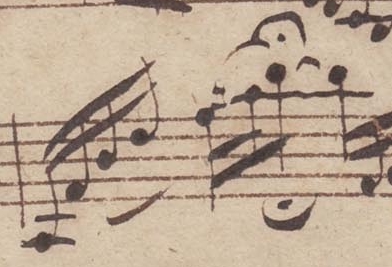
… der identisch ist. Was jetzt geschieht, ist etwas ganz Besonderes, und zwar in diesem Fermatentakt [Takt 22]:

[spielt 1. Hälfte von Takt 22]
04

… dieses cis4, weil es paßt hier gar nicht rein. Wir haben ja hier einen D7-Akkord, so:

[spielt den D7-Akkord]

… der müßte sich nach G-dur auflösen:

[spielt Dreiklang von G-dur]

JSB “bastelt” hier aber die Note cis4 rein. Und die Frage stellt sich: Was ist das denn hier? Ist es ein Herren- oder ein Dienerton? Also man könnte jetzt auch vermuten, daß er hier eine Zwischendominante nochmal einbringt:

[spielt den DD7-Akkord mit cis4 und den Dominantakkord als Auflösung]

Aber wir sind ja bereits in der Dominante [Takt 21], dann eine kurzzeitige Zwischendominante [16tel-Note cis4 in Takt 22] und dann wieder die Dominante [Note d4 mit Fermate] … das macht wenig Sinn, dieser Aufwand lohnt sich hier nicht. Außerdem ist die Zeitspanne [nur eine 16tel-Note cis4] auch viel zu kurz, um hier eine Zwischendominante einzufügen, die wahrgenommen werden könnte. Und: Das cis4 ist eingebunden [also unbetont]. Wir haben hier einen Bindebogen …

[spielt 2. Zz von Takt 22]

… sogar das d4 ist noch angebunden. D. h., daß JSB hier, ja, …, eine Irritation schafft, mit diesem Halbton cis4, und daß diese Passage wie eine Frage endet. Viele Interpreten sehen das anders und meinen, man könnte noch eine Verzierung auf die Note cis4 setzen:

[spielt 2. Zz von Takt 22 mit Mordent auf der Note cis4 und betont die Spitzennote d4 mit einem Abstrich]

… und das d4 als Abschluß spielen. Mit einer Verzierung würde man auch die Note cis4 mindestens einmal wiederholen. Aber meiner Meinung nach soll sie eigentlich nur im „Vorbeigehen”, sozusagen „en passant”, erscheinen. Sie soll nicht zu deutlich akzentuiert werden, weil, es geht gleich weiter:

[spielt die ersten drei 16tel-Noten nach der Fermate]

… und da haben wir wieder ein c3. Wir befinden uns immer noch im D7-Akkord:

[spielt den D7-Akkord]

… und haben ihn nicht verlassen. Dieses cis4 ist sozusagen ein melodisches Element, was, später am Satzende [Chromatik], zu einer grandiosen Auswirkung kommt.

Anmerkung: Im Anschluß an das Seminar hatte das Publikum die Möglichkeit, Fragen zu stellen. Dieser Takt wurde nochmals aufgegriffen und alternative Fassungen für die Tonhöhe cis4 demonstriert.


Es ist noch etwas Besonderes, und zwar wir haben 2 Bindebögen, die einander direkt folgen. Das bedeutet in meiner Interpretation, daß – wie bei einem Bindebogen sowieso: [spielt 1. Bindebogen des Takt 22 und die anschließende Note a3] … die dem Bindebogen folgende Note betont ist. Das bedeutet weiterhin, daß ein decrescendo in der 2. Zz stattfindet:

[spielt 2. Zz von Takt 22]

D. h. es wird nicht das d4 …

[spielt d4, den Spitzenton von Takt 22]

… als Abschluß betont. Sondern diese Note ist angehängt. Wenn also 2 Bindebögen einander folgen, dann hat es meistens zum Resultat, daß der 2. Bindebogen einen Akzent bekommt und decrescendiert, also im weiteren Verlauf leiser wird. Wir haben nochmals eine solche Stelle in diesem Satz, die das bestätigt. Ja, noch etwas: Viele Analysten sehen hier den Schluß des 1. Teils des Préludes und denken, daß jetzt die 2. Satzhälfte anfängt. Das ist aber nicht so. Die 2. Satzhälfte fängt natürlich … [spielt Anfang von Takt 19] … mit dieser Tonika an und führt zu diesen beiden Harmonien, die uns jetzt die ganze 2. Satzhälfte lang begleiten werden.

Anmerkung: Auffällig sind die beiden Baßnoten cis2 und c2 der Takte 20 und 21, zwei Tonhöhen, die beide Harmonien klar trennen: cis2 als Terz der DD und c2 als Septim der Dominante. Sowohl der stetige Wechsel zwischen c4 und cis4 als auch der doppelte Orgelpunkt d2-a2 ist charakteristisch für die 2. Satzhälfte.

Wir haben immer den Orgelpunkt d2 und a2:

[spielt die Quint d2-a2]

Das d2 steht für die Dominante und das a2 für die DD [wobei sie auch als Quint der Dominante angehört]. Und so geht es in Takt 22 [nach der Fermate] weiter, es fängt mit einem a2 an:

[spielt die aufsteigende Skala von Takt 22 mit a2 beginnend bis zum Beginn von Takt 24]

Hier sind keine Bindebögen, warum? Weil die Harmonie hier klar ist. Es gibt keinen Zweifel, es ist alles in der Dominante mit Septim. Aber, was jetzt im übernächsten Takt geschieht:

[spielt Takt 24 mit Auftakt d4]

… da passiert zum ersten Mal eine halbtönige Ausweitung des Tonraums, nämlich zum es4. Das ist die None dieses Akkords der Dominante:

[spielt die Akkordtöne der Dominante und betont die Septim c4 und die None es4]

Septim, None, das ist also die kleine Tonraumerweiterung. Jetzt sind wir also auf der None gelandet, man bemerkt dieses halbtönige Umspielen der Note d4, die der Spitzenton bislang war, …

[spielt 1. und 2. Zz des Takt 24]

… dieses vorübergehende Entsetzen, das JSB nun selbst gepackt hat, daß er jetzt nun über diesen Tonraum hinweg gegangen ist, so daß er die Note d4 ganz „ängstlich” umspielt, und jetzt …

[spielt weiter bis zum Ende von Takt 24]

… kehrt er schnurstraks zurück auf sicheren Grund, den Grundton:

[spielt weiter bis zur 2. Zz von Takt 25]

Das ist die Dominante, die sich mal kurz auflöst …

[spielt weiter bis zum Ende von Takt 25]

… zur Tonika. Das ist aber keine richtige Auflösung, sondern das soll in erster Linie etwas bewirken, nämlich das:

[spielt Takt 26 und betont die Noten g3 und cis4]

Die Note g3 und die Note cis4:

[spielt zunächst g3 und cis4, dann die 2. Takthälfte]

Dieser Tritonussprung macht uns natürlich die DD klar. Jetzt setzt JSB aber einen 2-B auf die Note h3, dadurch wird auch die nachfolgende Note b3 betont. Wir sind da einen kurzen Moment in einem harmonisch ungesicherten Raum, weil die DD, die wir hier haben:

[spielt den DD9-Akkord]

… hat die Note b3 als None, die sich nach a3 auflöst. Hier haben wir aber zunächst ein h3, das ist zwar eine leitereigene Tonhöhe:

[spielt die Tonleiter von A-dur]

… also melodisch „richtig”, aber harmonisch „falsch”, wenn Sie so wollen. Und deshalb setzt JSB einen 2-B auf die Note h3, damit man sie deutlich hört.

Anmerkung: Diese Reibung zwischen h3 und b3 ist besonders dissonant und ausdrucksstark.


Die Urtextausgaben machen daraus einen 3-B:

[spielt die Version der Urtextausgaben mit einem 3-B auf der Note cis4]

Anmerkung: Dadurch bleibt die Note h3 ein unbetonter Dienerton der DD, was die Dissonanz, die halbtönige Abfolge, abschwächt.

Manche Editionen ändern sogar noch die Note h3 zu b3:

[spielt cis4-b3-a3-b3]

Damit ist harmonisch „alles klar”, da gibt es keine Irritation. Aber in dieser Version schon:

[spielt cis4-h3-a3-b3]

Anmerkung: Ein Kuriosum am Rande: JSB hätte mit der Tonhöhe c4 anstelle von cis4 die Buchstaben seines Namens CHAB zitiert. Die harmonische Irritation mit cis4, h3 und b3 war ihm aber wichtiger als das Namenszitat.

Also es sind hier 2-Bn: [spielt 2. Hälfte von Takt 26 mit 2-Bn auf den Noten h3 und a3] Damit wird, wie gesagt, auch die Note b3 und der Grundton a3 betont. Und jetzt auch die Septim g3:

[spielt weiter bis zum Ende von Takt 27 mit 3-B auf g3 in der 1. Zz]

Anmerkung: Unerwähnt blieben im Vortrag die stabilisierenden 3-B in Takt 25 auf der Note a2, in Takt 26 auf der Note g2 und in Takt 27 auf der Note cis3, die jeweils den Grundton der DD und der Tonika, sowie die Terz der DD akzentuieren.

Die Auflösung zur Tonika in Takt 26 bewirkt eine Kräftigung des Grundtons g3, der aber umgedeutet wird zur Septim der DD.


Jetzt erscheint das cis4, das im Fermatentakt eingeführt wurde, ein letztes Mal, oder ein vorletztes Mal, denn es wird wiederholt, als Leitton [und Wechselnote] zum d4.

[spielt cis4-d4-cis4-d4]

Wir sind jetzt ziemlich eindeutig in D-dur gelandet: [spielt Takt 28 bis zur Note d2] So, das ist wieder der Orgelpunkt d2 [Pause]. Ich würde jetzt vorschlagen, ich bin zwar „gut in Fahrt” [Lachen im Publikum], aber es wird nochmals hier einen ziemlichen „Brocken” geben, der geknackt werden muß, und das wäre jetzt ein wenig zu viel, ich denke wir brauchen noch ungefähr eine halbe Stunde, wenigstens, bis wir am Ende sind. Ich würde gerne eine kurze Pause machen [Applaus].

[nach der Pause]

Ich möchte noch etwas nachtragen, ich habe das Ganze ja ohne Manuskript gehalten. Eine Kleinigkeit zu den letzten beiden Stellen, die wir gehört haben. Die Urtextausgaben gleichen die beiden Stellen einander an, diese:

[spielt zunächst vorbereitend den Takt 23]

Die Urtextausgaben machen daraus einen 3-B: [spielt Takt 24 mit jeweils einen 3-B auf den Noten es4 der 1. Zz und d4 der 2. Zz] … und genauso auch hier:

[spielt Takt 26 mit jeweils einen 3-B auf den Noten cis4 der 3. Zz und b4 der 4. Zz]

Das steht natürlich nicht da. Warum? Die Stellen ähneln sich zwar, sie gehen auch beide auf diesen Fermatentakt zurück:

[spielt 2. Zz von Takt 22]

… wo diese Chromatik bereits angedeutet wird. Aber in Takt 24 passiert alles in einem harmonisch gesicherten Raum:

[spielt Beginn von Takt 24]

Es geschieht nur eine ganz kleine Tonraumerweiterung zur None hin, mehr nicht. Währenddessen in diesem Takt:

[spielt die 3. und 4. Zz von Takt 26]

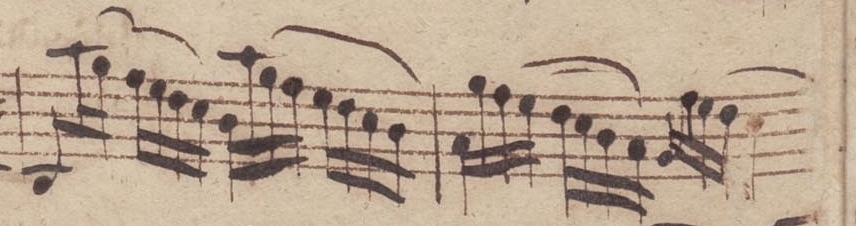
… für einen Moment lang die Harmonie destabilisiert wird. Deswegen die Bindebögen auf denjenigen Noten, die das bewirken. Jetzt kommen wir zu einer Stelle, – und ich versuche nun, mich etwas mehr an das Manuskript zu halten, – wo nur … die Artikulation … uns auf die Fährte bringt, … was harmonisch gemeint sein kann. Es ist nämlich so, wir haben zum ersten Mal 4 lange Bindebögen, was schon außergewöhnlich ist. Und, na ja, ich spiele Ihnen zunächst einmal meine Version:

[spielt Takt 29 bis zum Beginn von Takt 31]

So klingt diese Passage.
05

In dieser Passage von 2 Takten würde man zunächst denken, AMB hat sich hier drei- oder viermal verschrieben … , daß die Bindebögen eigentlich alle gleich sein müßten. Also das Ende dieser Bindebögen ist immer eindeutig, bis auf den letzten, da hat AMB wegen eines Zeilensprungs vergessen, in der nächsten Zeile darunter, den Bindebogen fortzuführen. Das ist ganz eindeutig so, weil am Zeilenende darüber der Bindebogen ganz weit über das Notensystem hinausgeführt ist. Aber er wird nicht in der nächsten Zeile fortgeführt. Also, da ist offen, wo er endet, aber die anderen 3 Bindebögen enden immer am Ende der 2. oder 4. Zz [oder doch nicht?, s. u.]. Nun, was haben wir denn hier eigentlich? Wir haben eine Tonleiter. Die könnte auch so klingen, wenn JSB sie nicht gebrochen hätte [herunter oktaviert, um sie in den Tonraum d2-c4 zu bringen], klänge sie so:

[spielt Takt 29ff beginnend mit der Baßnote d2 und dann eine absteigende Tonleiter beginnend mit der Spitzennote c7]

Sie sehen also, das ist ein riesiger „Berg”. Aber weil das eine Tonleiter ist, können Sie Diener- und Herrentöne eigentlich gar nicht detektieren. D. h., die Harmonie bleibt ungeklärt. Und weil dies so ist, könnte man sagen, warum dann überhaupt Bindebögen? Ich spiele anfänglich den Orgelpunkt d2 einmal mit:

[spielt im détaché Takt 29, wobei in der ersten Takthälfte die Note d3 als Zweitstimme mit erklingt, und hängt den Folgetakt an]

Man könnte die Bindebögen auch weglassen. Aber: Bindebögen haben bei JSB immer etwas zu bedeuten. So bin ich also wieder auf die harmonische Suche gegangen. Es liegt nahe, daß diese Spitzentonhöhen:

[spielt die ersten drei 16tel-Noten der 1. und 3. Zz von Takt 29f]

… also die Tonhöhen nach dem Intervallsprung, sich auflösen, daß sich z. B. die Septim c4 nach h3 auflöst. Und so habe ich mir einmal verschiedene Harmonisierungen ausgedacht. Zunächst sieht es so aus, als ob wir folgendes haben: [spielt Doppelgriffe fis3-c4, gefolgt von den Terzen g3-h3, fis3-a3, e3-g3 und d3-fis3] Das ist eine einfache Harmoniefolge von dem D7-Akkord über die Tonika, Dominante und Tonikaparallele bis zur Dominante. Es könnte aber auch so klingen:

[spielt die 2. Hälfte von Takt 29 bis zur 1. Zz von Takt 31, mit jeweils einem Akkord auf der dritten 16tel-Note der 1. und 3. Zz: zunächst den Tonika-Akkord, dann die Akkorde der Subdominantparallele, der Tonikaparallele und der Dominante]

Darin wäre auch die Tonikaparallele am Ende enthalten, in dem letzten Beispiel davor auch noch die Subdominantparallele. Das gab es bereits im 1. Teil des Préludes [Takt 12], a-moll als Vorstufe zu e-moll. Oder, es könnte so gehen:

[spielt den Tritonus fis3-c4, dann g3-h3, c3-e3, fis3-a3, h2-d3, e3-g3, a2-c3 und d3-fis3]

Das ist auch grundsätzlich nicht viel anders. Das bedeutet aber, daß wir tatsächlich genau eine Auflösung auf der dritten 16tel-Note haben, also so:

[spielt nochmals und ergänzt die Auflösungsakkorde zur Tonika, Subdominantparallele, Tonikaparallele und Dominante, jeweils auf der dritten 16tel-Note der 1. und 3. Zz der Takte 29ff]

… was bedeutet, daß da immer der Bindebogen anfängt. Das würde folgendes heißen:

[spielt Takt 29ff, wobei die langen Bindebögen immer auf der dritten 16tel-Note der 1. und 3. Zz anfangen]

Anmerkung: Vorhalte werden in den Suiten in der Regel nicht an ihre Auflösung gebunden.

Ich war mit dieser Lösung eigentlich ganz zufrieden … das klingt schlüssig, überzeugend, plausibel … nur, das war mir dann doch zu simpel, und zu liedhaft. Also, es ist nicht deswegen, daß ich mir noch einmal Gedanken gemacht habe, weil ich mit Fehlern in der Abschrift AMB’s nicht leben könnte. Sondern ich habe mir aus künstlerischen Gründen gedacht: „Das ist es wohl doch nicht, weil: warum eine so einfache Harmoniefolge nach diesen ganzen chromatischen Verästelungen? JSB kehrt dazu nicht zurück.” Das war mir klar. Ich habe dann weiter gesucht. Und … ach so, da gibt es noch eine … Ja! … So, wie ich soeben die Bindebögen gesetzt habe, wäre das ja eine Korrektur der Abschrift. Nur der 2. Bindebogen von AMB …

[spielt 2. Hälfte von Takt 29]

… entspricht diesem Schema. Der 3. Bindebogen nicht mehr:

[spielt den Takt 30 mit beiden Bindebögen, die jeweils erst auf der vierten und nicht auf der dritten 16tel-Note beginnen]

Da setzen die Bindebögen eine 16tel-Note später ein. Es ist nämlich so: Der letzte Bindebogen, der unvollständig ist, weil er in der nächsten Notenzeile nicht mehr fortgesetzt wurde, beginnt auf der vierten 16tel-Note:

[demonstriert mit vier Fingern der linken Hand, die die vier 16tel-Noten repräsentieren sollen, und zeichnet den Bindebogen, beginnend mit dem 4. Finger in die Luft]

Man kann aber sehen, AMB hat sich nochmal verschrieben. Sie hat eine Note vergessen. Sie hat eine Note zwischen den ersten beiden 16tel-Noten nachträglich eingefügt und hat die letzte Note [vierte 16tel-Note] ausradiert, so daß man denken könnte, daß sie vergessen hat, den Bindebogen, der zunächst auf der dritten Note zu liegen kam, um eine 16tel-Note nach vorne zu verschieben. Sie hat also den Bindebogen nicht mehr korrigiert, hat das vergessen, – und die Fortführung des Bindebogens in der nächsten Zeile hat sie sowieso vergessen. Also, der führt einfach so ins Leere: [demonstriert mit Händen] Also wäre dieser Bindebogen, selbstverständlich, eine 16tel-Note nach vorne zu versetzen. Der Bindebogen zuvor [Takt 30, 1. Zz] beginnt “leider” auch auf der vierten 16tel-Note. Er sieht aber so aus, daß er gerade [waagrecht, ohne Krümmung] anfängt und hat dann darunter nochmals einen kürzeren Strich, der mißlungen zu sein scheint, weil die Tinte ausgegangen ist oder sonst irgend etwas passiert ist. Der obere Bindebogen wird also nicht nach unten zum Notenkopf geführt, sondern fängt waagrecht an. Dann ist doch plausibel, daß der Anfang des Bindebogens deshalb nicht dasteht, weil der Tintenfluß nicht funktioniert hat. Also verlängert man hier diesen Bindebogen nach vorne bis zur dritten 16tel-Note nach unten. Und damit „ist die Welt in Ordnung”. Was den ersten Bindebogen [Takt 29, 1.Zz] anbelangt, da hat sich AMB definitiv verschrieben, oder es sieht so aus, als ob sie ihn verlängert hat, weil er fängt so an:

[spielt Takt 29 mit einem einzigen langen Bindebogen, beginnend auf der Note h3]

Also tatsächlich auf der vierten 16tel-Note, weil wir hier eine 8tel-Note d2 haben. Oder es sieht so aus, daß sie einen 2-B schrieb, und dann einen 4-B:

[spielt einen 2-B auf der Note h3 und einen 4-B auf der Note a3]

Nun kann aber auf einer einzigen Note [a3] nicht ein Bindebogen aufhören und ein zweiter beginnen. Entweder ist das eine Verlängerung des 4-B nach vorne oder der 2-B ist um eine 16tel-Note nach hinten verrutscht. Letzteres scheint mir an dieser Stelle am plausibelsten zu sein, weil wir die gleichen Tonhöhen im selben Takt [2. Takthälfte] ja nochmals bekommen:

[spielt Takt 29 mit einem 2-B auf der Note c4, einem 4-B auf der Note a3 und den nachfolgenden langen Bindebogen beginnend auf der Note h3 der 3. Zz]

Eine zweimalige Auflösung nach G-dur in diesem Takt macht nun wirklich keinen Sinn:

[spielt Takt 29 mit 2 langen Bindebögen, beginnend auf den beiden Noten h3, jeweils unterlegt mit einem G-dur Akkord]

Das macht keinen Sinn, wenn man das harmonisch denkt. Insofern komme ich zu dem Schluß, daß es ein 2-B ist, der – denken Sie an den Fermatentakt, wo auch 2 Bindebögen einander folgen – bewirkt, daß der 2. Bindebogen stark anfängt und decrescendiert, so daß die Auflösung zur Tonika [3. Zz] tatsächlich entspannt geschehen kann, und das macht für mich auch Sinn: [spielt nochmals Takt 29 mit den 3 Bindebögen] Also, der 1. Bindebogen wäre insofern geklärt. Jetzt, was ist mit den letzten beiden? Äh – ich muß mich entsinnen, wie ich darauf gekommen bin … Ja! Ich habe Ihnen ja diese Tonleiter vorgespielt. Und die, das ist klar, setzt sich zusammen aus folgenden Terzen:

[spielt Tonfolge bestehend aus c4 – a3 – fis3 – d3 – h2 – g2 – e2 – c4 – a3 … usf.]

Was sind das für Harmonien? Wir haben den D7-Akkord:

[spielt d3 – fis3 – a3 – c4]

Der löst sich in die Tonika auf:

[spielt g2 – h2 – d3]

Und dann die Tonikaparallele:

[spielt e2 – g2 – h2]

D. h., wie wär’s eigentlich, wenn wir an dieser Stelle einmal annehmen, daß wir den D7-Akkord in Takt 29 auflösen zur Tonika, was eindeutig ist, soweit stimmen auch die Bindebögen ganz gut und jetzt erscheint irgendwann die Tonikaparallele, – das kann man sich denken:

[spielt Takt 30 mit dem Akkord der Tonikaparallele auf der vierten 16tel-Note g3]

… und hier schon die Dominante, die oft der Tonikaparallele folgt:

[spielt 2. Hälfte von Takt 30 mit dem Akkord der Dominante auf der vierten 16tel-Note fis3]

… und dann bleibt die Dominante in Takt 31 erhalten. Mit anderen Worten, der vorletzte Bindebogen dieser Passage im Takt 30 beginnt tatsächlich auf der vierten 16tel-Note, also auf dem g3, das ist die Terz der Tonikaparallele: [spielt nochmals Takt 30 beginnend mit dem Bindebogen auf der Note g3, unterlegt mit dem Akkord der Tonikaparallele] … und dann die Dominante:

[spielt 2. Hälfte von Takt 30 beginnend mit dem Bindebogen auf der Note fis3, unterlegt mit dem Akkord der Dominante]

Nun ist das aber sehr ungewöhnlich, weil, … ein Bindebogen mit einer Betonung auf der vierten 16tel-Note einer Zz, das ist also wirklich die unbetonteste Note einer Zz. Und man sträubt sich zunächst einmal, das zu akzeptieren. Aber wenn man versteht, daß mit dieser Tonleiter, mit diesen Bindebögen, uns die Tonikaparallele von JSB nochmals „kredenzt” wird, so ganz unbemerkt, wo sie ja eine so große Rolle im 1. Teil spielte, … so über Skalen, nicht über Harmonien, … sondern es wird mittels Skalen, also melodisch zur Tonikaparallele hingeleitet, dann akzeptiert man auch, daß man hier „aus dem Takt gerät”. Daß es hier eine Stelle ist, die sowohl metrisch wie harmonisch ins Leere mündet, sich auflöst in den „luftleeren Raum”. Und so ist es auch hier.

Anmerkung: Ungewöhnlich bleibt noch die Betonung der Baßnote c3 in Takt 30. Sie wirkt als ein Vorhalt (Dienerton) zur Baßnote h2 der 3. Zz (und weniger als Septim der Dominante, die ein Herrenton wäre). Betrachtet man nochmals den Bindebogen in der Abschrift AMB’s, so fällt ins Auge, daß dieser Bindebogen nicht dezidiert auf der letzten Note d3 in Takt 29 aufhört sondern über diese Note hinaus gezogen und auf die 1. Note c3 des Folgetakts gerichtet ist. Es liegt deshalb nahe, anzunehmen, daß die Anfangsnote c3 des Takt 30 angebunden ist.

In diesem Fall wäre die Spitzentonhöhe h3, die Quint der Tonikaparallele, als Auflösung betont. Ebenso kann man die Spitzentonhöhe a3 der 3. Zz schon der Dominante zurechnen. Folglich sind dann beide Spitzentonhöhen auf der zweiten 16tel-Note der 1. und 3. Zz betont sowie, wie gesagt, auch deren vierte 16tel-Note.

Mit der Anbindung der Baßnote c3 wird übrigens definitiv das Anklingen von a-moll, der Subdominantparallele, ausgegrenzt [s. o.].

Diese Deutung des Bindebogens über sieben 16tel-Noten löst auch ein bogentechnisches Problem, denn auf diese Weise kann der nachfolgende Bindebogen zum Ausgleich im Gegenstrich ausgeführt werden.

Michael Bach
Urtext = Plain Text? – An Analysis of the Prélude in G Major, Part 2 (Measures 4-18)

Britain

This is a translation of the post „Urtext = Klartext? “, October 25, 2013
by Dr. Marshall Tuttle.


Michael Bach

This is the second part of my presentation transcription
” Urtext = Klartext? “

of 4 May 2013 at the Foundation Domnick Nürtingen near Stuttgart

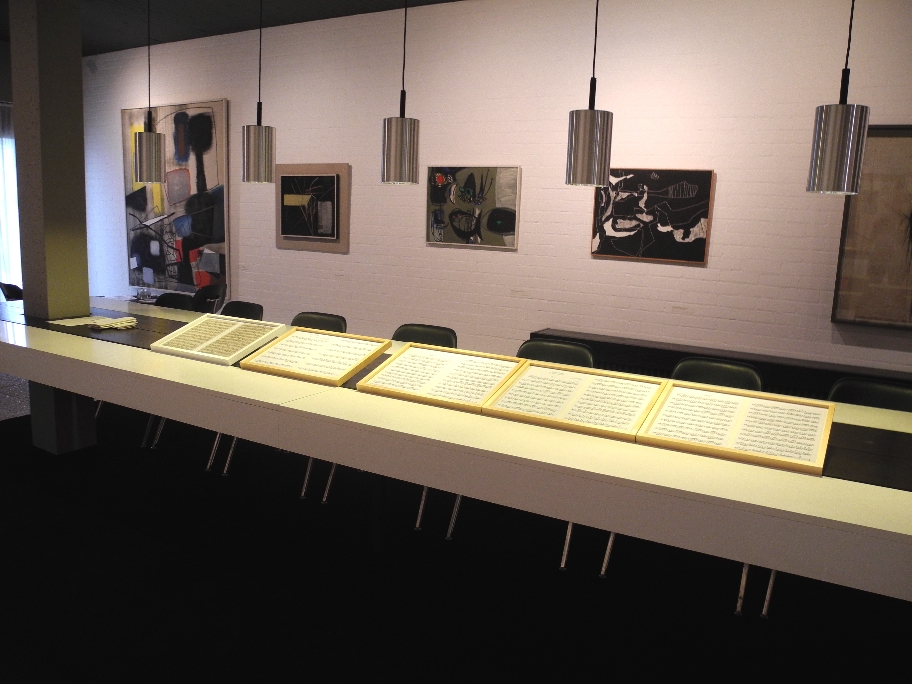
Stiftung Domnick Präsentation Urtext Klartext

Note:
It is helpful to open a second browser window with the blog post “The slurs in the Prelude of the Suite in G Major for Solo Cello ”
https://www.bach-bogen.de/blog/thebachupdate/die-bindebogen-im-prelude-der-suite-in-g-dur
in order to have the score visible.

Glossary:

JSB = Johann Sebastian Bach
AMB = Anna Magdalena Bach
2-slur, 3-slur, 4-slur = slurs over 2, 3 or 4 notes
1. Zz = 1st beat of a measure
c4 = c ‘ (middle C)
DD = dominant of the dominant
D7 chord = dominant seventh chord
D9 chord = dominant ninth chord

The terms “Master tone” and “Servant tone” are borrowed from Thomas Mann ‘s novel Doctor Faustus. They distinguish between chord tones and non-chord such as passing notes. For details see Part 1 of the analysis.


Now for the question: Are there errors in the copy of AMB ?

I previously left off at measure 4, because the first slur there gave me a headache as well as the first slur in measure 5.

01

There are other locations later in the Prelude where I at first assumed there to be errors, and this is very rarely the case. In the Allemande, for example, the movement that follows the prelude, that there are no errors. There are also no questionable slurs in that movement. Otherwise, there are relatively few notational errors in the Suites.

But here, in this Prelude, sometimes the question has arisen if there are errors. Because if I now resolve this harmony …

[plays measures 3 and 4]

… then a resolution is always associated with relaxation. For this reason, it makes no sense to me at all, for this resolution, to notate here the first 3-slur on the bass note G2 and to stress A3. Since A3 is foreign to the chord, it is not a Master tone, it is a Servant tone in this case. It would receive a particularly strong emphasis if we had the first 3-slur here. That is, a 3-slur is slightly larger than a 2-slur and therefore the following note A3 would have an even stronger stress.

I then looked at the scans of the exact copy of AMB and I could imagine that either AMB had overextended this 3-slur, because it is conspicuously thicker on the 2nd note, or perhaps she may have a little more carefully placed the pen to the page early, to ensure that the ink flow on the 2nd note was really guaranteed.

Well, this is speculation. An answer to this question can at best provide only from the original of the transcription – a microscopic examination of the original document. Were it to follow that there is actually a 3-slur, then I would say that the 3-slur is an AMB copying error.
I hold a 2-slur therefore probable, because it responds to this tritone, he resolves:

[plays F#3–C4 and G3-slur3]

And, this octave is not slurred:

[plays G2–G3 of the first beat of measure 4]

Because in such a slur [2-slur through G3 and G2 ] the second note is an unaccented octave, it dissolves into the lower root. So if I do the bow stroke on the 2nd note the octave is more audible.

In the second half of the measure it makes perfect sense to slur G3 to G2 with a 2-slur, because now the harmonic journey begins – once again the root and the third are highlighted:
[plays the 2nd half of measure 2-slur on G2 through the last note F#3]

With this F# the first modulation begins. Yes, the modulation to the relative minor.

[plays the beginning of measure 5]

Note:
A brief reconciliation between the keys G major and E minor is presented here by means of a single note F#3 which is shared between the two keys.

The relative minor, E Minor, is not expected. Therefore, it should be highlighted. Therefore, it is appropriate to put a 2-slur on the root of E minor.

Again, it is questionable whether AMB wrote a 3-slur. As I said, it is the same as in measure 4, one has to add that this slur has two ends. I suspect that she actually wrote the slur twice, i. e. a 3-slur is overwritten with a 2-slur.

Note:
The inspection of the original copy of AMB on 19.09.2013 reinforces this interpretation. However, this determination was made only with the aid of a magnifying glass and not a microscope.

(see blog post from 01.10.2013 “The original copy of the Six Suites for Cello by Anna Magdalena Bach”)

However that may be, the relative minor is introduced – that is why I put a 2-slur on the note E3 :

[plays the beginning of measure 5]

… and the DD develops:

[plays the DD in measure 6 and its resolution to the dominant]

And there, in measure 6, JSB now places a 2-slur on the seventh G3, because this is the fourth Master tone of the D7 chord of the dominant:

[plays root A2, third C#3, fifth E3 and seventh G3]

These tones define this chord – and the seventh, G3, must be resolved – to the third of the dominant:

[plays the DD7 chord and its resolution to D major]

JSB stresses the tone G3 with a 2-slur.

But all Urtext editions set a 3-slur on the note C#3. This is not quite so bad, as the seventh G3 is also emphasized in this case.

Note:
Incidentally, the bariolage of measures 31ff is already indicated here.

[Plays measure 6]

Yes – and the resolution to the dominant is done with a 2-slur because JSB now wants to highlight the highest note d4.

[plays beginning of measure 7]

This D4 is the root of the chord, and it is the highest note for the entire first half of the movement.
The Urtext editions make it this:

[plays the beginning of measure 7 with a 3-slur on the note F#3]

… and thus emphasizes the note C#4 which really makes no sense at all. The note C#4 is a Servant tone, a neighbor note.

[plays measure 7 to the beginning of measure 8]

Now we have again the relative minor as in measure 5:

[plays measure 5]

… which was a surprise. There is only a brief transition with the note F#3 …

[plays transition from measure 4 to measure 5]

But here we have no transition to the relative minor but the dominant, which generally resolves to G major:

[plays resolution to G major ]

However, here we get E minor:

[plays E Minor]

… and that very clearly, because the bass note E2 and third G3 are accented with the 2-slur on E2.

[plays measure 8]

This is something that is called a deceptive cadence in music. This harmony [E minor] is unexpected – similar to mesaure 5. The 2-slur is here an upbow and the third G3 is emphasized as the resolution of the note F#3 .
Now the slur is definitely not repeated:

Note:
All Urtext editions add here a complete 3-slur.

[plays second half of measure 8]

This signifies a decrescendo in JSB. So, this is exactly the reverse measure 3, where a slur is placed only in the second half of the measure, which signifies an increased dynamic. Here is a decrescendo. That is, JSB lets this harmony end by fading away:

[plays measure 8 to the beginning of measure 9]

Now we do not know where we are harmonically:

[repeats measure 9]

Here we have the first 3-slur on the G3. Now it is clear that the DD appears:

[plays the notes of the DD, the 3-slur on the seventh, G3, and the subsequent note D4]

So, JSB wants to stress the note D4:

Then, JSB places a 3-slur on the resolution, the third of the dominant, F#3:

[plays the beginning of measure 10]

Again, the highest note is emphasized D4, then a 3-slur on the note D3 in the third beat, the root of the dominant chord, which dominates this measure.

[plays second half of measure]

This strengthening of the dominant is necessary because after this measure the harmonies are very turbulent. JSB therefore ensures that the dominant is clearly manifested here. Therefore, it is strongly accentuated with two 3-slur, on the main pitches of the chord [root, third and fifth].

Now, looking foward, JSB takes a third approach to the relative E Minor. And he makes it quite powerful, even using a ninth chord. The first dissolves into an intermediate station, to A minor, subdominant of the relative minor:

[plays chord of A minor ]

JSB and then brings back a tension chord – and that is the secondary dominant to the relative minor in measure 13.
How does he do it ?
So once again the dominant :

[plays measure 10]

Then a tritone up:

[plays the note G#3 of measure 11]

Since we already know that we hear a tension chord:

[plays first the secondary dominant seventh of A Minor, the subdominant of the relative minor, E minor, and then the first notes of measure 11]

A 2-slur on the note F3 emphasizes this again. Why this 2-slur? Because this is the ninth of the chord:

[plays chord of the ninth to the note F4]

So even more dissonant than a seventh chord, but with the ninth F4 displaced downward an octave [F3], where JSB now connects this note (that’s a strange thing, really) to the root note, which actually is a Master tone. The ninth chord actually has 5 Master tones, but a four-part setting can accommodate only 4 tones, the root is simply omitted, because that is clear anyway, or as the Swabians say: It chatters without saying [This is obvious].

So this fundamental E3 is now attached to the ninth F3. JSB stresses the ninth F3:

[plays 2-slur on the note F3]

Many Urtext editions make it a 3-slur:

[plays 3-slur on the note F3]

… and thus emphasize the seventh D3. But this seventh is here in the bass and is repeated constantly, so it dominates anyway … I can not imagine that JSB has written a 3-slur here. [The copy of AMB is unambiguous.]

[plays again the whole of measure 11 and continues to measure 12]

This dissonance resolves to the subdominant of E Minor [A Minor]. So this is the first station on the way to relative minor. JSB writes a 3-slur:

[plays 3-slur of the 1st beat]

… and emphasizes the note B3. This is a Servant tone. Can that be correct? I say yes, because that is a Master tone of the relative minor, that JSB targeted in this manner.

[plays the entire measure 12]

In the third beat JSB repeats the signal sequence and there is now a 2-slur on the note E3, the tonic of the relative minor and thus emphasizes again the note B3.

[plays the chord tones of of the relative minor to the note E4]

So, JSB already prepares the relative minor in this manner. In retrospect we will see why he does it.

Note:
The accentuation of the note B3 in the first beat of measure 12 has a second reason: the fourth 16th note of the 1st and 3rd beat was previously usually a neighbor note below a Master tone. Here, in the course of a melodic intensification, the “Servant tone” B3 leads the “Master tone” A3 up to the high point of the phrase on C4. This melodic gesture is new, the existing motif has been transformed.

JSB now leads with the note F#3 at the end of measure 12 … F#3 has heretofore been a pitch that was used to prepare the relative minor:

[plays the end of measure 12]

… but the relative minor does not yet appear, first we get its secondary dominant:

[plays the entire measure 13]

02

These are all exclusively Master tones – it is a D7 chord, which would have to resolve to the relative minor – and even so, JSB sets the first 4-slur here:

[plays the beginning of the measure up to the A3]

… to this seventh A3 to give it a particularly strong emphasis.

Note:
The secondary dominant of the relative minor must resolve to the relative minor. To strengthen this expectation of the listener, the seventh is given extra accentuation.

Now, in the third beat JSB writes but only a 3-slur:

[plays beats 3 and 4 with a decrescendo]

… in order to emphasize the note F#3. This is a weakening of the 4-slur.

All Urtext editions invariably write only two 3-slurs on the note D#3.

Now the following happens – I repeat this measure:

[plays measure 13 and the beginning of measure 14]

What’s this? That’s not a resolution, or? This actually should have sounded something like this:

[plays the end of measure 13, and then, as a resolution, a chord of E minor]

After these mighty preparations of the previous cycles, one really expects now, especially after the secondary dominant that the relative minor finally appears. But it is not really clear, rather, it hides. And then JSB further uses a 2-slur on the note F#3 – and even binds the tonic of the relative minor.

[plays the first beat of measure 14]

Then the note G3 is easily stressed. And this close play around the pitch space G3-E3?

G is the root of G major, the key of the Prélude:

[plays chord notes of G Major]

E is the keynote of the relative minor:

[plays chord tones of E Minor]

And the note F#3 is exactly in between. Now one wonders, well, the whole thing resolves, because the note G3 dominates, but not yet on to G major?

[plays measures 13 and 14 and leads on to G Major]

That would be G major – anything is possible …

Note:
The assumption that the 2-slur is easy to slip just a 16th note backward is to be excluded, since obviously this balance between tonic and relative minor is intentional. The transitional nature of this measure is conveyed by means of this small 2-slur.

We shall see – that is the shortest way from the tonic to the relative minor?

[plays G3 and E3 and F#3]

and between … the note F#3 – This tone range:

[plays the chromatic G3, F#3 , F3 and E3 ]

… is the nucleus of this movement. We have already seen three times the relative minor presented in a variety of forms, that is the real “theme” of the entire movement

But here we are deprived of this resolution – no matter where [relative minor or tonic] – we have a kind of intermediate measure – you could now suspect – that there is sometimes at JSB – the resolution is not immediate but presented in a later measure, for example. Here, however, the note F#3 thwarts the resolution in the subsequent measure. Namely, it happens as follows:

[plays measure 14, stressing the note F#3]

F# , F# , F# , F# …

[plays up to the first note F#2 in measure 15]

F#. Now we know, there is still neither G Major nor E Minor to come. F# lacks a resolution and we have again a dissonant chord:

[plays measure 15]

If JSB had omitted the note F#3 in beat 3 of measure 14, we would have landed in E minor.

[plays second half of measure 13 without the note F#3, and then the E minor chord with the bass note E2.]

One can also imagine a different melody in measure 14, and then you would end up in G Major:

[plays alternative melody and then G major]

But JSB does not do that. Rather he composes a harmonic progression implying the relative minor which actually comes to nothing.

Yes, a 3-slur on the seventh C3 in measure 15 measure is correct:

[plays measure 15 and then the first note of measure 16, G2]

That the bass note G2, could now be the resolution to G major:

[plays chord notes of G Major]

We might just as well expect (as we have already heard in this movement) that the dominant resolves to the relative minor:

[plays the dominant chord, and then the relative minor, E Minor]

So, the matter is still open in the first two notes …

[plays G2 and B2 of the measure 16]

… where it will resolve. Now JSB slurs the tritone B2-F3, which always has a reason, because the two Master tones are usually not bound. But JSB binds to the central F3 and separates the successive note, E3.

03

All Urtext editions write the same thing twice in this cycle, a 3-slur on the note B2 – and thus the harmony is clear:

[plays the notation of the Urtext editions and emphasizes B2 and F3]

This is clear because it is clearly a D7 chord:

[plays the D7 chord and the resolution to the subdominant C Major]

… resolves to C major.

But, and this has given me many headaches, why is there a 2-slur here? I can explain it so that JSB has kept the D7 chord still hidden actually. He deceives with the resulting emphasis on the note E3 …

[resolves the tritone: plays B2-F3 to B2-E3, the relative minor]

… the resolution to the relative minor which still could be expected.

[plays measure 15 again with resolution to the relative minor]

I think that’s an interesting point, because it once again supplies the idea of the relative minor which was virtually ignored in the resolution of measure 13. But in the second half of the measure this throwback to the relative minor is transformed into a unique D7 chord:

[plays measure 16]

Because … the seventh F3 is now emphasized a second time. It resolves …

[plays further to measure 17]

… to C major, the third being emphasized twice with a 3-slur.

Note:
Measure 16 has a certain affinity with measure 2 in that the respective first beats both indicate a first inversion chord. That is, in both cases the relative minor sound is heard as analyzed. While the ambivalence between subdominant and relative minor persists in measure 2, the 2nd half of measure 16 clearly intones a D7 chord.

Furthermore, in measure 17 the subdominant is unmistakably highlighted by the slurs as opposed to measure 2. Measure 17 forms together with measure 18 and the first half of measure 19 a clearly definable harmonic cadence, the completion of the first half of the movement.

But now JSB does something special:

[plays measure 18]

Now he repeats the third measure and he takes up the articulation of the third measure:

[points to the projection of a copy of AMB, measure 3]

This is the first half of the 3rd measure [without slur] – and the second half with the 2-slur on the note F#3, under the word ” Prélude “, is now taken for measure 18. One might reasonably ask what JSB has in mind. The note F#3 still stands for the harmonic development in the first part of the movement. Then, on the third beat of measure 18 JSB places the 2-slur on the bass note G2.

[plays measure 18]

JSB therefore slurs to the F#3, and emphasizes the tritone above, the note C4. This C4 will be of great importance in the second half of the movement. And JSB demonstrates by means of his slurs that the first half of the measure stands for the first half of the movement, and the second half of the measure foreshadows the second half of the movement.

All Urtext editions, however, set a consistent 3-slur in the first and third beats.

And now in measure 19, we also have a 2-slur, the note B3 is to be emphasized as the resolution of the high note C4:

[plays the beginning of measure 19]

Again, all the Urtext editions notate a 3-slur.

But this resolution is not the same resolution as in measure 4. The note F#3 in measure 3 is resolved first by G3 and B4 only then resolves the note C4:

[plays resolution of measure 3]

Here JSB reverses the order of resolution, resolving first the C4 to B3 by:

[plays resolution of measure 18]

Note:
Additionally, this detail displays the increased significance of the new pitch C4 over F#3.

…and then brings the resolution of the note F#3 by:

[plays resolution and emphasizes the note G3 of the second beat of measure 19]

Why is that? Because JSB quotes the beginning of the movement. The beginning:

[plays measure 1]

JSB cites this motive here as a resolution. That is, the resolution has created a new beginning here. The harmonic development of the first half of the movement is now complete, and something new begins. JSB demonstrates this new beginning quite clearly with that quotation.

.

Urtext = Klartext? – eine Analyse des Prélude in G-dur, Teil 2 (Takt 4-18)

Germany

Michael Bach

Dies ist der zweite Teil der Transkription meiner Präsentation „Urtext = Klartext?

vom 4. Mai 2013 in der Stiftung Domnick in Nürtingen bei Stuttgart

Stiftung Domnick Präsentation Urtext Klartext

Anmerkung:

Es ist hilfreich, parallel ein zweites Browserfenster zu öffnen mit dem Blogbeitrag “Die Bindebögen im Prélude der Suite in G-dur für Cello solohttps://www.bach-bogen.de/blog/thebachupdate/die-bindebogen-im-prelude-der-suite-in-g-dur um den Notentext direkt vor Augen zu haben.

Glossar:

JSB = Johann Sebastian Bach
AMB = Anna Magdalena Bach
2-B, 3-B, 4-B = Bindebogen über 2, 3 oder 4 Noten
drei 2-Bn = drei Bindebögen über 2 Noten
1. Zz = 1. Zählzeit eines Takts
c4 = c’
DD = Doppeldominante
D7-Akkord= Dominantseptakkord
D9-Akkord = Dominantnonakkord

Die Ausdrücke “Herrenton” und “Dienerton” sind dem Roman “Doktor Faustus” von Thomas Mann entlehnt. Sie unterscheiden zwischen akkordeigenen Tönen und nicht akkordeigenen Tönen, wie Wechselnoten oder Durchgangstöne. Näheres hierzu in Teil 1 der Analyse.


Nun, die Frage: Gibt es Fehler in der Abschrift von AMB? Ich habe bislang den 4. Takt außen vor gelassen, weil mir da der 1. Bindebogen Kopfzerbrechen bereitet hat, ebenso auch der 1. Bindebogen in Takt 5.

01

Es gibt später noch andere Stellen im Prélude, wo ich auch zuerst einmal von Fehlern ausgegangen bin, und das ist sehr selten der Fall. In der Allemande z. B., der Satz, der danach kommt, gibt es keine Fehler. Es gibt auch dort keine fragwürdigen Bindebögen. Auch ansonsten gibt es relativ wenige Schreibfehler in den Suiten. Aber hier, in diesem Prélude, hat sich mir manchmal doch die Frage gestellt, ob es Fehler sind. Weil, wenn ich nun dies harmonisch auflöse … [

spielt Takt 3 und 4]

… dann ist eine Auflösung immer mit einer Entspannung verbunden. Deshalb macht es für mich überhaupt keinen Sinn, hier bei der Auflösung den ersten 3-B zu setzen, auf der Baßnote g2 und noch dazu das a3 zu betonen. Weil die Note a3 ist akkordfremd, sie ist kein Herrenton, sie ist ein Dienerton in diesem Fall. Sie würde eine besonders starke Betonung erhalten, wenn wir hier den ersten 3-B hätten. D. h. ein 3-B ist etwas größer als ein 2-B und würde deshalb die nachfolgende Note a3 noch etwas stärker betonen. Ich habe mir die Scans von der Abschrift AMB dann genauer angeschaut und ich könnte mir vorstellen, daß AMB entweder diesen 3-B nochmals überschrieben hat, denn er wird auffallend dicker über der 2. Note, oder sie hat vielleicht vorsichtigerweise die Feder einmal etwas früher angesetzt, um sicher zu sein, daß der Tintenfluß über der 2. Note wirklich gewährleistet ist.

Nun, das ist spekulativ. Eine Klärung dieser Frage kann allenfalls nur das Original der Abschrift bieten – eine mikroskopische Untersuchung des Originals. Wenn es sich dann ergeben würde, daß hier ein 3-B tatsächlich steht, dann würde ich sagen, daß das ein Abschriftsfehler von AMB ist.

Ich halte einen 2-B deshalb für wahrscheinlich, weil er antwortet auf diesen Tritonus, den er auflöst:

[spielt fis3-c4 und g3-h3]

Und, diese Oktav ist nicht gebunden:

[spielt g2-g3 der 1. Zz des Takt 4]

Weil in einer solchen Bindung [2-B über g2 und g3] geht die 2. Note, die unbetonte Oktav, im Grundton klanglich unter. Wenn ich also den Bogenstrich auf der 2. Note beginnen lasse, ist die Oktav besser hörbar. In der 2. Takthälfte macht es durchaus Sinn, mit einem 2-B den Grundton g2 zu betonen, weil jetzt die harmonische Reise beginnt, – es wird nochmals der Grundton und die Terz hervorgehoben:

[spielt die 2. Takthälfte mit 2-B auf g2 bis zur letzten Note fis3]

Mit diesem fis3 geschieht die 1. Modulation. Ja, diese 1. Modulation zur Tonikaparallele:

[spielt Beginn von Takt 5]

Anmerkung:

Es handelt sich hier eigentlich nur um eine knappe Überleitung mit einer einzigen Note fis3, welche beiden Tonarten, G-dur und e-moll, angehört.


Die Tonikaparallele e-moll erwartet man nicht. D. h. man muß sie schon ein wenig hervorheben. Deshalb ist es richtig, einen 2-B auf dem Grundton von e-moll zu setzen.

Auch hier ist fraglich, ob AMB einen 3-B geschrieben hat. Wie gesagt, es gilt das Gleiche wie in Takt 4, wobei eines zu ergänzen ist, daß dieser Bindebogen zwei Enden hat. So vermute ich, daß sie den Bindebogen tatsächlich zweimal geschrieben hat, d. h. einen 3-B mit einem 2-B überschrieben hat.

Anmerkung:

Die Einsichtnahme in das Original der Abschrift von AMB am 19.09.2013 bestärkt diese Vermutung. Allerdings diente als Lesehilfe nur eine Lupe und kein Mikroskop

(s. Blogbeitrag vom 01.10.2013 „Das Das Original der Abschrift der Suiten für Violoncello von Anna Magdalena Bach“)

Egal, wie dem ist, die Tonikaparallele wird also eingeführt – ich setze deshalb einen 2-B auf der Note e3:

[spielt den Anfang von Takt 5]

… und daraus entwickelt sich die DD: [spielt die DD in Takt 6 und deren Auflösung zur Dominante] Und da, in Takt 6, setzt JSB nun einen 2-B auf der Septim g3, weil das ist der 4. Herrenton des D7-Akkords:

[spielt Grundton a2, Terz cis3, Quint e3 und Septim g3]

Diese Töne bestimmen diesen Akkord – und die Septim g3 muß aufgelöst werden – in die Terz der Dominante:

[spielt den DD7-Akkord und die Auflösung nach D-Dur]

Diesen Ton g3 betont JSB mit einem 2-B. Alle Urtext-Ausgaben setzen aber einen 3-B auf der Note cis3. Das ist in diesem Fall nicht ganz so schlimm, weil die Septim g3 ebenso betont wird.

Anmerkung:

Übrigens wird die Bariolage der Takte 31ff bereits hier schon angedeutet.

[spielt Takt 6]

Ja – und die Auflösung zur Dominante geschieht mit einem 2-B, weil JSB nun den Spitzenton d4 hervorheben möchte.

[spielt Anfang von Takt 7]

Dieses d4 ist der Grundton und er ist für die gesamte erste Satzhälfte auch der Spitzenton. Die Urtext-Ausgaben machen daraus das:

[spielt Anfang von Takt 7 mit einem 3-B auf der Note fis3]

… und betonen dadurch die Note cis4, was wirklich überhaupt keinen Sinn macht. Die Note cis4 ist ein Dienerton, eine Wechselnote.

[spielt Takt 7 bis Anfang Takt 8]

Nun haben wir wieder die Tonikaparallele wie in Takt 5:

[spielt Takt 5]

… die überraschte. Es gibt dort nur eine kurze Überleitung mit der Note fis3 …

[spielt Überleitung Takt 4 zu Takt 5]

Aber hier haben wir keine Überleitung zur Tonikaparallele sondern die Dominante, die sich allenfalls nach G-Dur auflöst.

[spielt Auflösung nach G-Dur]

Jedoch, wir haben hier e-moll: [spielt e-moll] Und das sehr deutlich, weil die Baßnote e2 mit einem 2-B betont wird, und die Terz g3.

[spielt Takt 8]

Das ist etwas, was man in der Musik einen Trugschluß nennt. Man erwartet diese Harmonie [e-moll] nicht – ähnlich wie in Takt 5. Der 2-B ist hier im Aufstrich und die Terz g3 wird betont, das ist die Auflösung von der Note fis3. Jetzt wird der Bindebogen definitiv nicht wiederholt:

Anmerkung:

Alle Urtextausgaben ergänzen hier einen 3-B.


[spielt 2. Takthälfte von Takt 8]

Das bedeutet bei JSB ein decrescendo. Also genau das Umgekehrte zu Takt 3, wo ein Bindebogen erst in der 2. Takthälfte gesetzt ist, was da eine dynamische Steigerung bedeutet. Hier ist es ein decrescendo. D. h., JSB läßt diese Harmonie ausklingen, verklingen:

[spielt Takt 8 bis Anfang von Takt 9]

Jetzt wissen wir zunächst nicht, wo wir harmonisch sind:

[wiederholt Takt 9]

Hier haben wir den ersten 3-B auf dem g3. Jetzt ist eindeutig, daß die DD erscheint: [spielt die Töne der DD, den 3-B auf der Septim g3 und die nachfolgende Note d4] Also, die Note d4 möchte JSB betonen. Danach setzt JSB einen 3-B auf der Auflösung, der Terz fis3 der Dominante: [spielt Anfang von Takt 10] Wieder wird der Spitzenton d4 betont, dann wieder ein 3-B auf der Note d3 in der 3. Zz, dem Grundton der Dominante, die diesen Takt beherrscht.

[spielt 2. Takthälfte]

Diese Festigung der Dominante ist nötig, weil nach diesem Takt wird es harmonisch sehr turbulent. JSB möchte also hier, daß die Dominante sich deutlich manifestiert. Deshalb wird sie kräftig mit zwei 3-B betont, auf deren wichtigsten Tonhöhen [Grundton, Terz und Quint]. Jetzt, ich greife mal vor, nimmt JSB noch einmal einen 3. Anlauf zur Tonikaparallele e-moll. Und das macht er ziemlich mächtig, er wird jetzt sogar einen Nonenakkord bringen, der sich zunächst auflöst in einer Zwischenstation, nach a-moll, der Subdominantparallele:

[spielt Akkord von a-moll]

Und dann bringt JSB wieder einen Spannungsakkord – und das ist die Zwischendominante zur Tonikaparallele in Takt 13. Wie macht er das? Also nochmals die Dominante:

[spielt Takt 10]

Dann ein Tritonus nach oben:

[spielt die Note gis3 von Takt 11]

Da wissen wir bereits, daß wir einen Spannungsakkord hören:

[spielt zunächst die Zwischendominante mit Septim von a-moll, der Subdominantparallele, und dann die ersten Noten des Takt 11]

Ein 2-B auf der Note f3, der nochmals dieses f3 betont. Warum dieser 2-B? Weil das die None des Akkords ist:

[spielt Nonenakkord bis zur None f4]

Also ein noch stärkerer Spannungsakkord als ein Septakkord, aber die None f4 ist nach unten oktaviert [f3], wobei JSB jetzt an diese Note f3 – das ist eine merkwürdige Sache, eigentlich einen Herrenton anbindet, den Grundton. Der Nonenakkord hat eigentlich 5 Herrentöne, aber in einem vierstimmigen Satz kann man nur 4 Töne unterbringen, so läßt man den Grundton weg, weil der ist sowieso klar, oder wie die Schwaben sagen: Das schwätzt sich von selbst [Das versteht sich von selbst]. Also dieser Grundton e3 wird jetzt hier an die None f3 angebunden. JSB betont die None f3:

[spielt 2-B auf der Note f3]

Viele Urtextausgaben machen daraus einen 3-B:

[spielt 3-B auf der Note f3]

… und betonen damit die Septim d3. Aber diese Septim ist hier im Baß und wird ständig wiederholt, ist also sowieso dominant … das kann ich mir nicht vorstellen, daß JSB an dieser Stelle einen 3-B notiert hat. [Die Abschrift von AMB ist unzweideutig.]

[spielt nochmals den gesamten Takt 11 und weiter zu Takt 12]

Dieser Spannungsakkord löst sich auf zur Subdominantparallele a-moll. Das ist also die 1. Station auf dem Weg zur Tonikaparallele. JSB schreibt einen 3-B:

[spielt 3-B der 1. Zz]

… und betont die Note h3. Das ist ein Dienerton. Kann das stimmen? Ich sage ja, weil das ein Herrenton der Tonikaparallele ist, die JSB ja anvisiert.

[spielt den gesamten Takt 12]

In der 3. Zz wiederholt JSB die Tonfolge und setzt jetzt nur einen 2-B auf der Note e3, dem Grundton der Tonikaparallele und betont somit nochmals die Note h3.

[spielt die Akkordtöne der Tonikaparallele bis zur Note e5]

Also JSB will in diesem Takt bereits die Tonikaparallele anklingen lassen. Im Nachhinein werden wir sehen, warum er das macht.

Anmerkung:

Die Akzentuierung der Note h3 in der 1. Zz von Takt 12 hat noch einen weiteren Grund: Die vierte 16tel-Note der 1. und 3. Zz war bislang in der Regel eine Wechselnote unterhalb eines Herrentons. Hier, im Zuge einer melodischen Steigerung, führt der „Dienerton” h3 oberhalb des Herrentons a3 weiter zur Spitzennote c5. Diese melodische Wendung ist neu, das bisherige Motiv wird umgestaltet.

Jetzt leitet JSB mit der Note fis3 am Ende des Takt 12 … also, das fis3 ist bislang eine Tonhöhe gewesen, die uns zu spüren gibt, daß es zur Tonikaparallele geht:

[spielt Ende von Takt 12]

… aber es erscheint noch nicht die Tonikaparallele sondern wir erhalten zunächst deren Zwischendominante: [spielt gesamten Takt 13]

02

Das sind alles ausschließlich Herrentöne – ein D7-Akkord, der sich zur Tonikaparallele auflösen müßte – und JSB schreibt hier trotzdem den ersten 4-B:

[spielt Anfang des Takt 13 bis zur Note a3]

… um diese Septim a3 besonders stark zu betonen.

Anmerkung:

Die Zwischendominante der Tonikaparallele müßte sich zwingend zur Tonikaparallele auflösen. Um diese Erwartung des Hörers zu untermauern, wird die Septim bekräftigend akzentuiert.

Jetzt, in der 3. Zz schreibt JSB aber nur einen 3-B:

[spielt 3. und 4. Zz mit decrescendo]

… um die Note fis3 zu betonen. Dies ist eine Abschwächung des 4-B. Alle Urtextausgaben notieren ausnahmslos nur zwei 3-B auf der Note dis3. Jetzt passiert folgendes – ich wiederhole nochmals diesen Takt:

[spielt Takt 13 und den Anfang des Takt 14]

Was ist das? Das ist doch keine Auflösung, oder? Hier müßte eigentlich so etwas erklingen:

[spielt Ende von Takt 13 und dann, als Auflösung, einen Akkord der Tonikaparallele e-moll]

Nach diesen mächtigen Vorbereitungen der vorherigen Takte, erwartet man nun wirklich, insbesondere nach der Zwischendominante, daß die Tonikaparallele endlich erscheint. Sie kommt aber eigentlich nicht deutlich, sondern sie verkriecht sich. Und dann setzt JSB noch einen 2-B auf der Note fis3 – und bindet sogar den Grundton e3 der Tonikaparallele an.

[spielt 1. Zz von Takt 14]

Dann wird die Note g3 leicht betont. Und dieses enge Umspielen des Tonraums g3-e3? G ist der Grundton von G-dur, die Tonika dieses Préludes:

[spielt Akkordtöne von G-dur]

E ist der Grundton der Tonikaparallele: [spielt Akkordtöne von e-moll] Und die Note fis3 liegt genau dazwischen. Jetzt fragt man sich: ja, löst sich das Ganze, weil die Note g3 dominiert, nicht doch noch nach G-dur auf?

[spielt Takt 13 und 14 und leitet zu G-dur über]

Das wäre G-dur – alles möglich …

Anmerkung:

Die Annahme, daß der 2-B einfach nur um eine 16tel-Note nach hinten verrutscht ist, ist auszuschließen, da offensichtlich diese Balance zwischen Tonika und Tonikaparallele gewollt ist. Das transistorische Wesen dieses Takts wird mittels dieses kleinen 2-B gefördert.

Wir werden noch sehen – das ist der kürzeste Weg von der Tonika zur Tonikaparallele:

[spielt g3 und e3 und fis3]

… und dazwischen die Note fis3 – Dieser Tonbereich:

[spielt die Chromatik g3, fis3, f3 und e3]

… ist der Nukleus dieses Satzes. Wir haben schon gesehen, dreimal ist die Tonikaparallele in irgendeiner Form erschienen, das ist das eigentliche „Thema” des gesamten Satzes. Aber hier wird uns diese Auflösung vorenthalten – egal wohin [Tonikaparallele oder Tonika] – wir haben so eine Art Zwischentakt – man könnte jetzt vermuten – das gibt es manchmal bei JSB – die Auflösung kommt nicht sofort sondern einen Takt später beispielsweise. Hier vereitelt aber ausgerechnet noch die Note fis3 die Auflösung im Folgetakt. Es passiert nämlich folgendes:

[spielt Takt 14, betont dabei die Note fis3]

Fis, fis, fis, fis … [spielt bis zur 1. Note fis2 des Takt 15] Fis. Da wissen wir, es wird weder G-dur noch e-moll kommen. Es fehlt eine Auflösung und wir haben wieder einen Spannungsakkord:

[spielt Takt 15]

Wenn JSB die Note fis3 in der 3. Zz von Takt 14 weggelassen hätte, dann wären wir in der Tat in e-moll gelandet:

[spielt 2. Hälfte von Takt 14 ohne die Note fis3 und anschließend den e-moll Akkord mit Baßnote e2]

Man kann sich auch eine andere Tonfolge in Takt 14 vorstellen, und dann würde man in G-dur landen:

[spielt alternative Tonfolge und anschließend G-dur]

Aber das macht JSB nicht, sondern er läßt diesen ganzen Anlauf zur Tonikaparallele eigentlich ins Leere laufen. Ja, also ein 3-B auf der Septim c3 in Takt 15 ist richtig:

[spielt Takt 15 und die erste Note g2 von T 16]

Das, die Baßnote g2, könnte nun die Auflösung zu G-dur sein:

[spielt Akkordtöne von G-dur]

Es könnte aber auch, wir hatten das bereits, die Dominante löst sich, hier in diesem Satz, auch in die Tonikaparallele auf:

[spielt Akkord der Dominante und danach Akkord der Tonikaparallele e-moll]

Also, es ist noch offen bei den ersten beiden Noten …

[spielt g2 und h2 des Takt 16]

… wohin sich das auflöst. Jetzt bindet JSB den Tritonus h2-f3, was immer einen Grund hat, denn normalerweise sind das 2 Herrentöne, die nicht gebunden werden. JSB bindet aber die Note f3 an und separiert die nachfolgende Note e3.

03

Alle Urtextausgaben schreiben in diesem Takt zweimal das Gleiche, einen 3-B auf der Note h2 – und damit ist die Harmonie klar:

[spielt die Fassung der Urtextausgaben und betont h2 und f3]

Das ist klar, denn es ist eindeutig ein D7-Akkord:

[spielt den D7-Akkord und die Auflösung zur Subdominante C-dur]

… der sich nach C-dur auflöst. Aber, und das hat mir viel Kopfzerbrechen bereitet, warum hier ein 2-B steht. Ich kann es mir eigentlich so erklären, daß JSB den D7-Akkord noch verheimlicht. Er täuscht mit der Betonung der Note e3 …

[spielt Auflösung des Tritonus h2-f3 zu h2-e3 der Tonikaparallele]

… die Auflösung zur Tonikaparallele noch vor, die man auch erwarten könnte:

[spielt nochmals Takt 15 mit Auflösung zur Tonikaparallele]

Ich finde das eine interessante Stelle, weil sie nochmals die Tonikaparallele, die als Auflösung des Takt 13 quasi übergangen wurde, als „Idee” liefert. Aber in der 2. Takthälfte wird diese Reminiszenz an die Tonikaparallele verwandelt in einen eindeutigen D7-Akkord:

[spielt Takt 16]

… weil die Septim f3 jetzt beim zweiten Mal betont wird. Das löst sich auf …

[spielt weiter zu Takt 17]

… nach C-dur, die Terz wird mit einem 3-B zweimal betont.

Anmerkung:

Takt 16 hat eine gewisse Verwandschaft mit Takt 2 insofern, als in der jeweiligen 1. Zz beider Takte ein Sextvorhalt angedeutet wird. D. h. in beiden Fällen klingt, wie analysiert, die Tonikaparallele an. Während die Ambivalenz Subdominante und Tonikaparallele in Takt 2 erhalten bleibt, wird jedoch in der 2. Hälfte von Takt 16 die Harmonie eindeutig zu einem D7-Akkord geführt.

Weiterhin, in Takt 17 wird im Gegensatz zu Takt 2 die Subdominante mittels der Bindebögen unmißverständlich hervorgehoben. Sie bildet zusammen mit Takt 18 und der 1. Hälfte des Takt 19 eine harmonisch klar definierbare Kadenz, die den Abschluß der 1. Satzhälfte markiert.

Aber jetzt macht JSB wieder etwas Besonderes:

[spielt Takt 18]

Jetzt wiederholt er den 3. Takt. Und zwar knüpft er an die Artikulation des Takt 3 an.

[deutet auf die Projektion der Abschrift von AMB, Takt 3]

Das ist die 1. Hälfte des 3. Takts [ohne Bindebogen] – und das die 2. Hälfte, der 2-B auf der Note fis3, unter dem Wort „Prélude”, wird nun für Takt 18 übernommen. Da merkt man bereits, was JSB vorhat: Die Note fis3 steht immer noch für die harmonische Entwicklung im ersten Teil des Satzes. Dann, in der 3. Zz von Takt 18 setzt JSB den 2-B aber auf die Baßnote g2:

[spielt Takt 18]

JSB bindet die Note fis3 also an, und betont den Tritonus oben, die Note c4. Dieses c4 wird im 2. Teil des Satzes von großer Bedeutung sein. Und JSB demonstriert mit der Setzung der Bindebögen schon einmal vorweg, daß die 1. Takthälfte für die 1. Satzhälfte und die 2. Takthälfte für die 2. Satzhälfte steht. Alle Urtextausgaben hingegen setzen übereinstimmend einen 3-B in der 1. und 3. Zz. Und jetzt in Takt 19 haben wir auch einen 2-B, die Note h3 soll akzentuiert werden, als Auflösung der Spitzennote c5:

[spielt Beginn des Takt 19]

Auch hier setzen alle Urtextausgaben einen 3-B. Es ist aber diesmal nicht diesselbe Auflösung wie in Takt 4. Die Note fis3 des Takt 3 wird zuerst nach g3 aufgelöst und dann erst die Note c5 zu h4:

[spielt Auflösung von Takt 3]

Hier macht JSB es umgekehrt, er löst zuerst das obere c5 nach h4 auf:

[spielt Auflösung von Takt 18]

Anmerkung: Auch an diesem Detail ist die neue Signifikanz der Tonhöhe c4 vor fis3 ablesbar.


… und holt dann die Auflösung der Note fis3 nach:

[spielt Auflösung und betont die Note g3 der 2. Zz von Takt 19]

Warum das? Weil JSB den Anfang des Satzes zitiert. Der Anfang:

[spielt Takt 1]

Dieses Motiv zitiert JSB hier als Auflösung. D. h. er hat hier einen Neuanfang gesetzt. Die harmonischen Entwicklungen der 1. Satzhälfte sind jetzt passé und es fängt jetzt etwas Neues an. Das demonstriert JSB ganz deutlich mit diesem Anfangszitat.