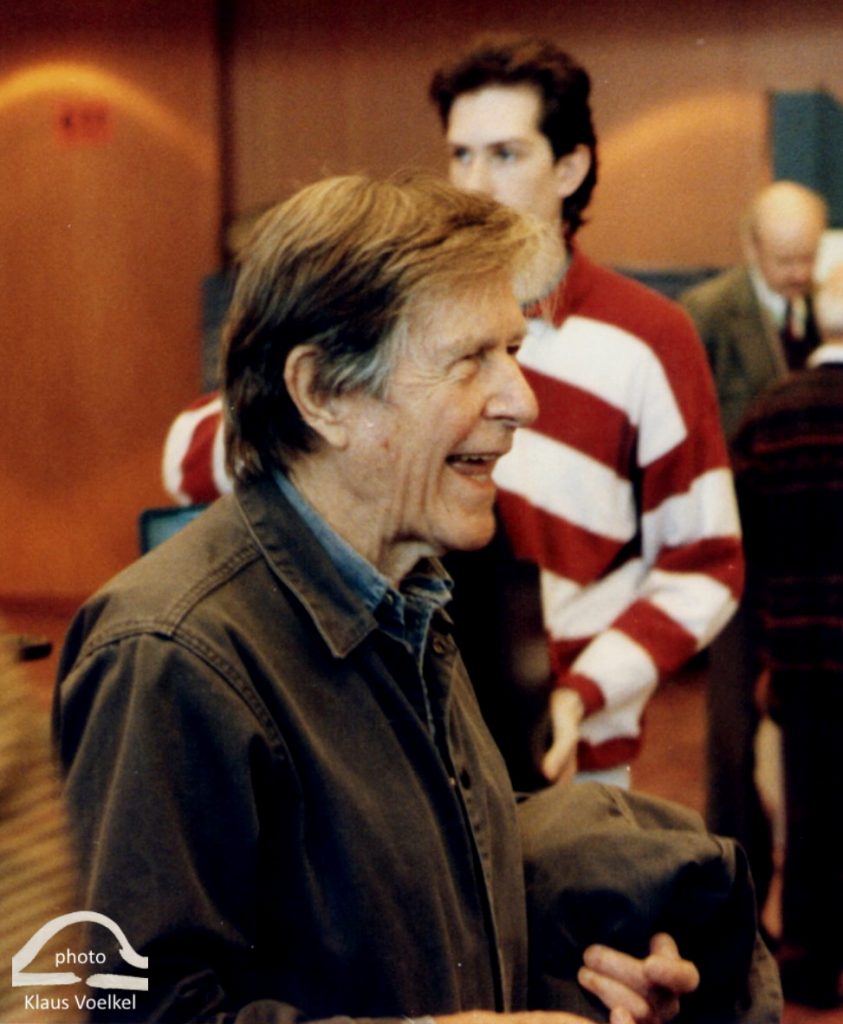
John Cage and Michael Bach in Assissi, June 1992. Photo: Renate Hoffleit.
“He’s been very important, because his bows are unique. He had them designed especially. They turned out not to be a repetition of things that existed in the Middle Ages, but really new bows that he has made. So he was the only one who could give me the information. It’s a little bit like writing for an instrument you don’t know, so you need to discover what it is by asking questions of someone who does know.”
John Cage
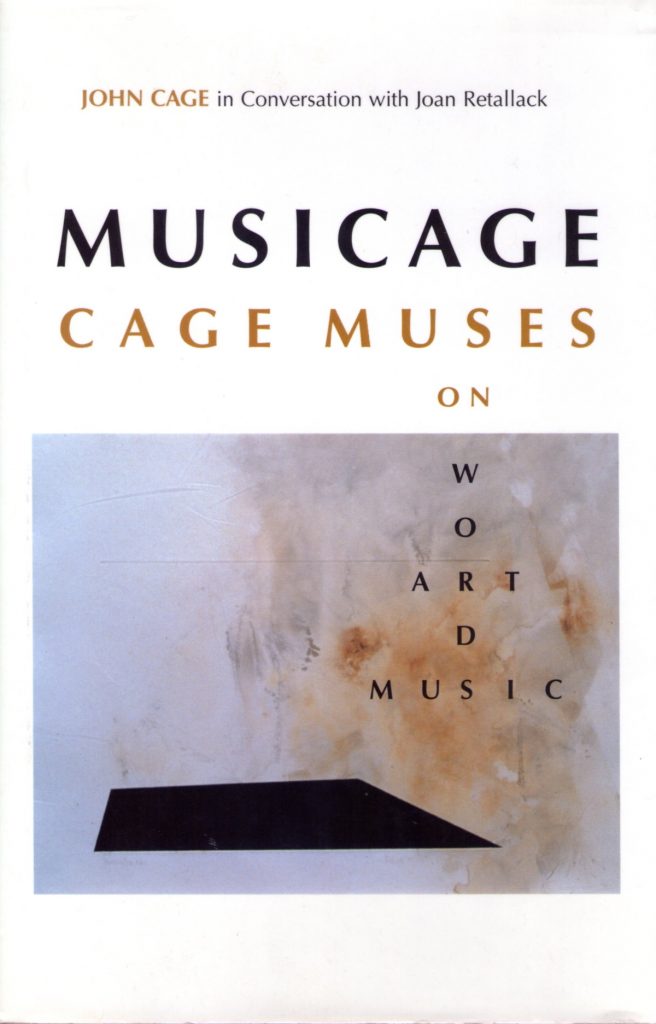
MUSICAGE, edited by Joan Retallack, Wesleyan University Press, Hanover, 1996, ISBN 0-8195-5285-2. Excerpt from page 296.
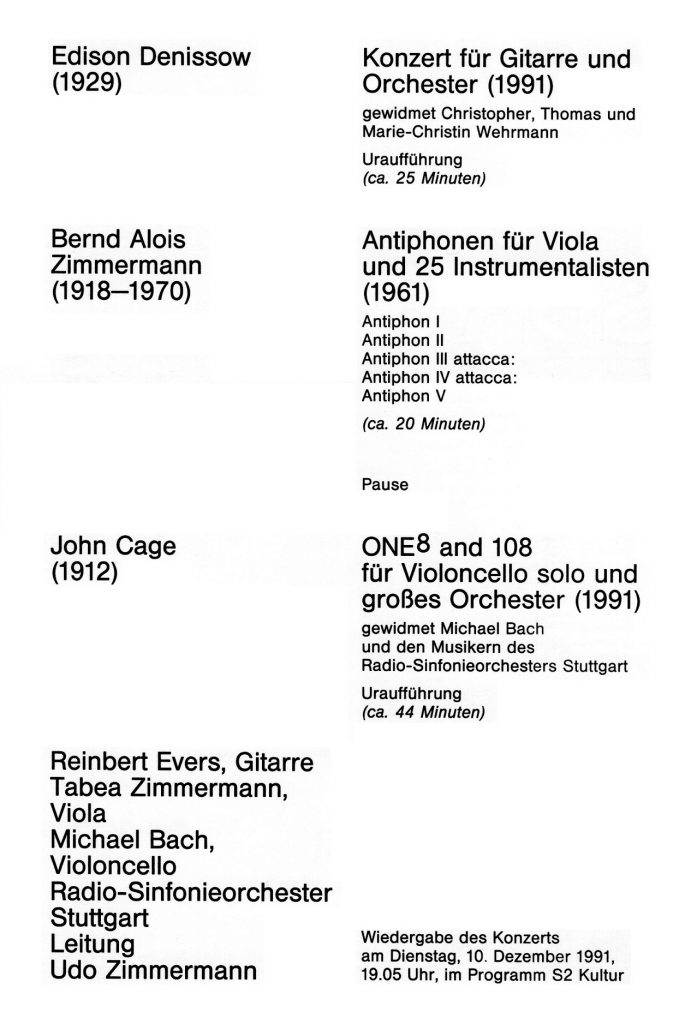
ONE8 and 108
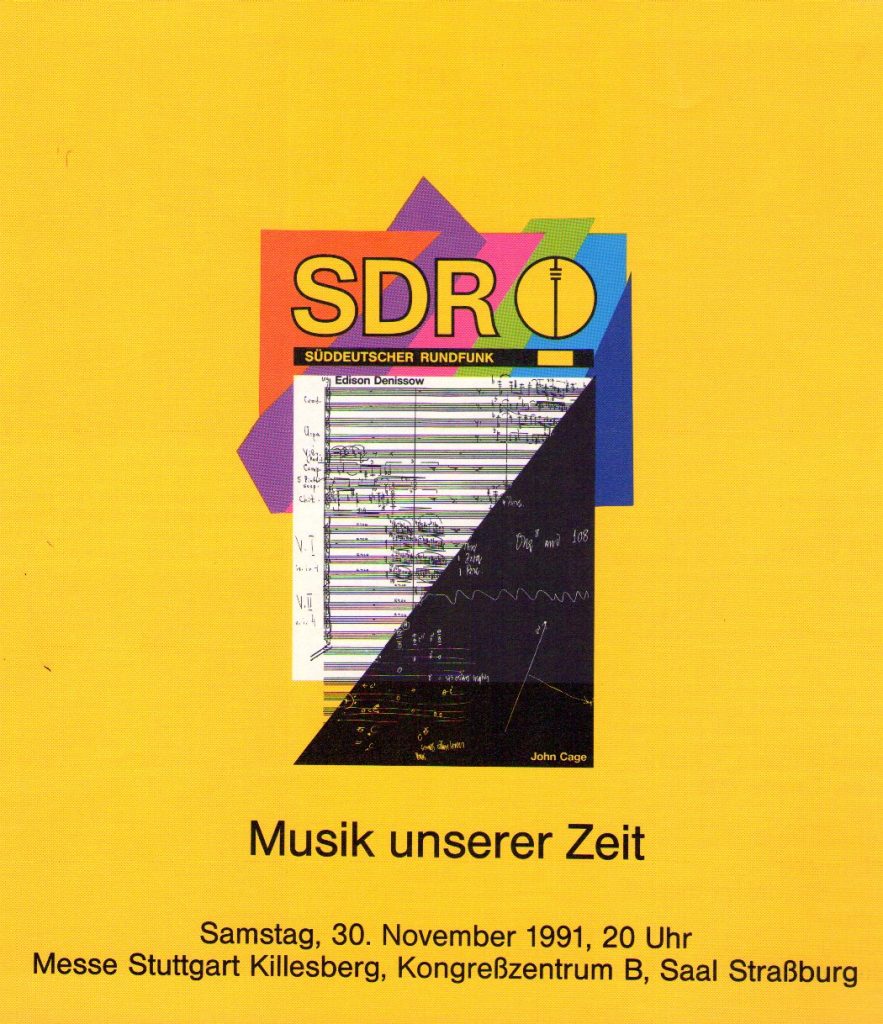
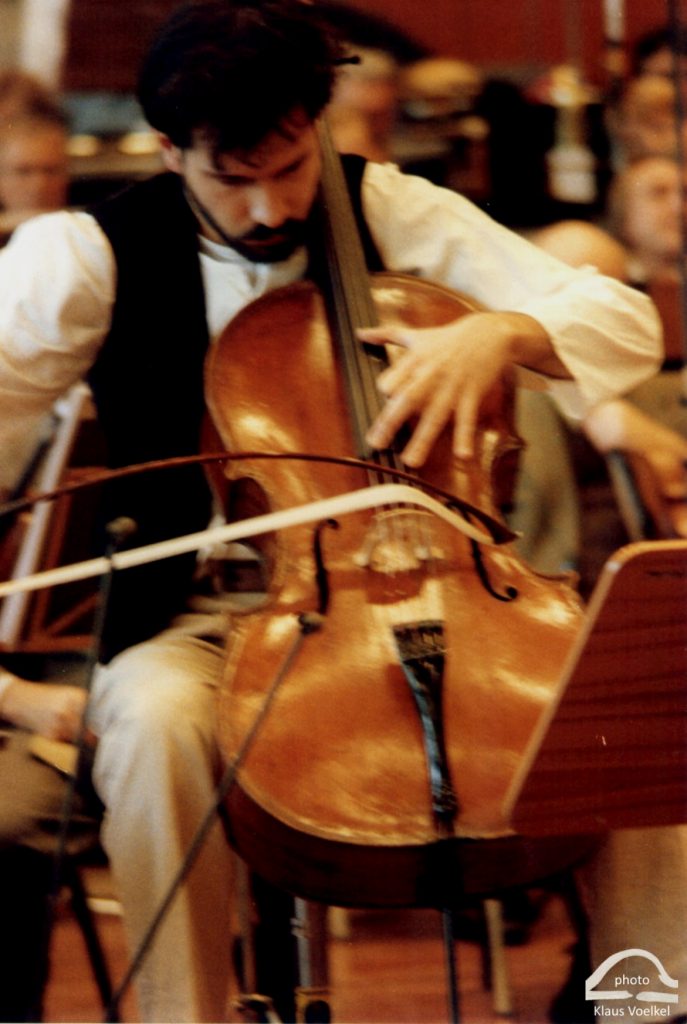
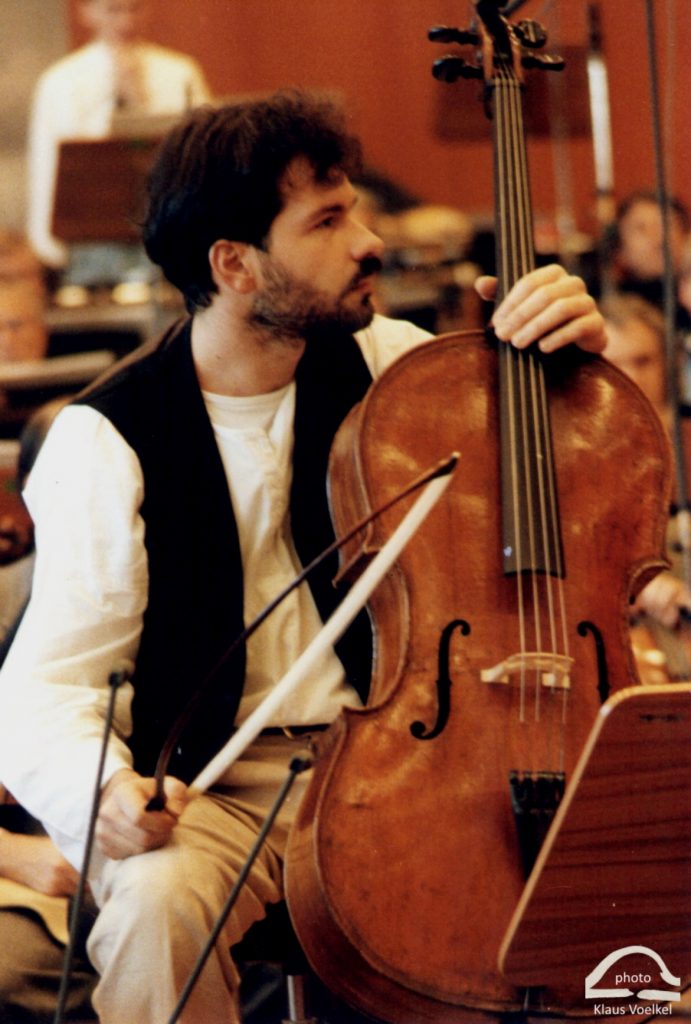
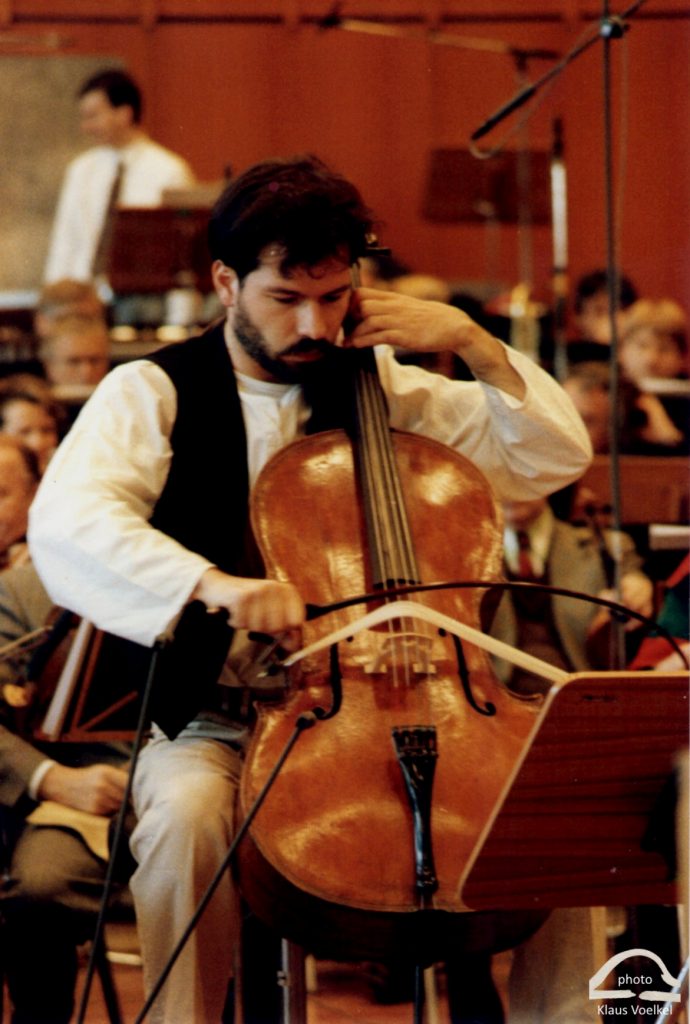
First performance of John Cage’s One8 and 108 for cello with curved bow and orchestra, Stuttgart, November 30, 1991.
Michael Bach, cello, with the Radio Symphony Orchestra Stuttgart. Photos: Klaus Voelkel.
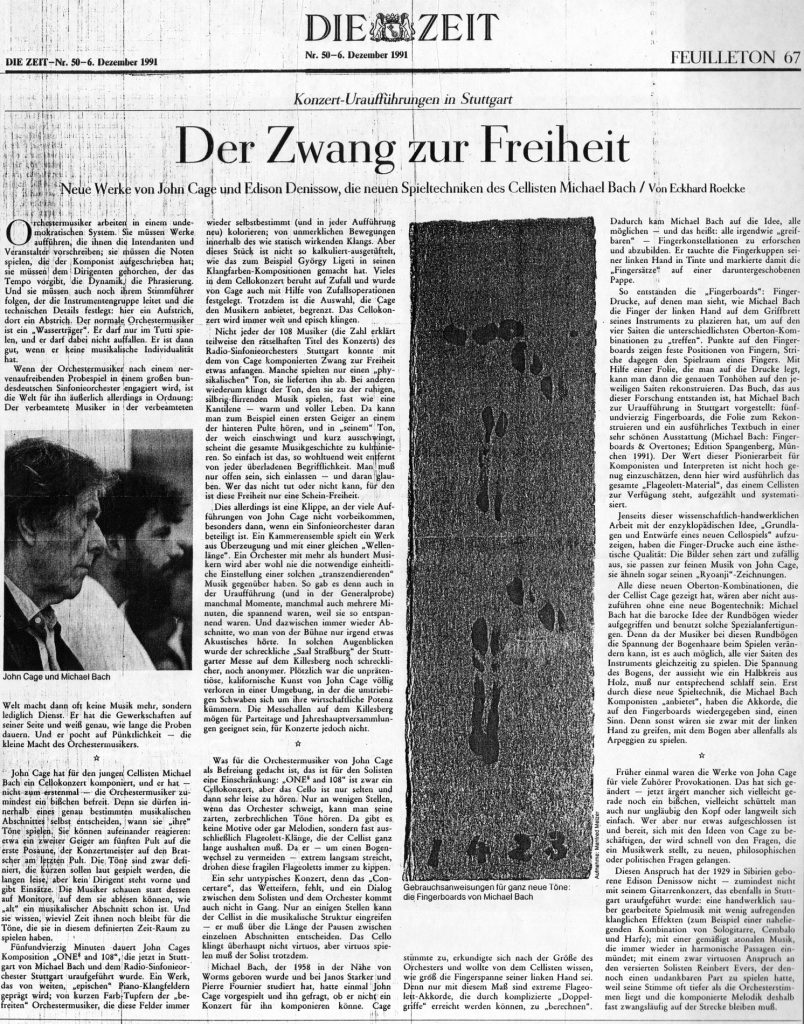
Article on the first performance in the weekly newspaper Die Zeit, December 6, 1991, by Eckhard Roelcke.
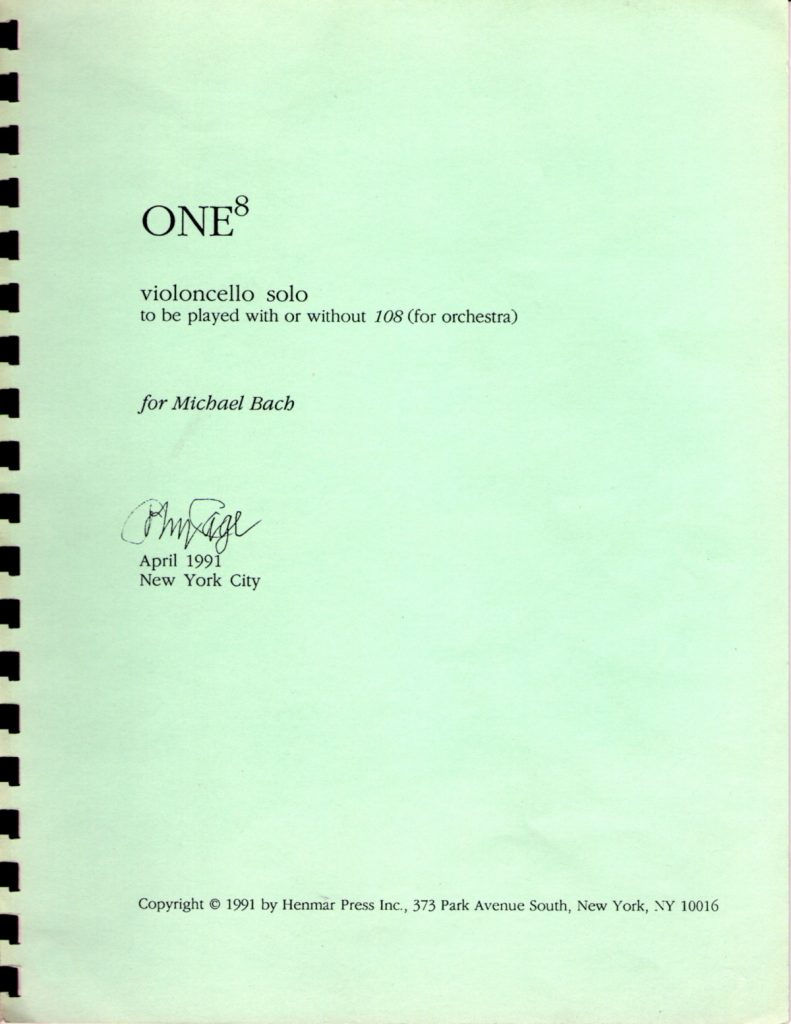
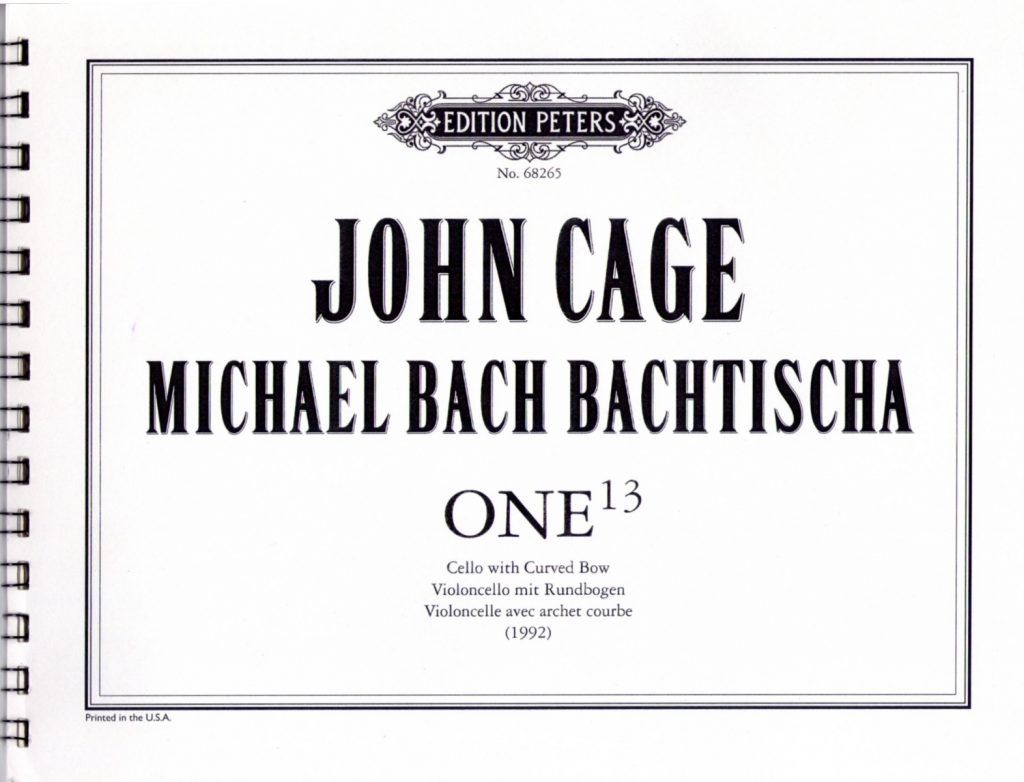
Covers of the scores of One8 and One13, Henmar Press Inc., New York. John Cage’s 1991 sketch for One8 and 108.
John Cage and Michael Bach
The connection between John Cage and Michael Bach extends from their first personal contact in 1987 in New York to their collaborative work on One13 in the summer of 1992.
First Encounters
In 1987, Michael Bach first met John Cage in his New York loft. In 1989, they met again on the occasion of a concert in New York, where Michael Bach performed, among other works, Cage’s Etudes Boréales for solo cello.
Michael Bach on his encounters with John Cage:
cage.los – John Cage Turns 101
The Curved Bow Meets John Cage
At the Contemporary Music Festival in Huddersfield on November 20, 1989, Michael Bach performed with the curved bow for the first time. He played a selection from John Cage’s 26’1.1499″ for a String Player.
In 1989, the question of polyphonic playing on the cello had become a central part of his work as a cellist.
On the development of the curved bow and its encounter with John Cage:
25 Years Ago Today, John Cage Died
The Collaboration on One8
The actual collaboration with John Cage began in 1990 and developed from Michael Bach’s work with the curved bow and the cello’s particular sonic possibilities. Cage was interested in the cellist’s individual technical possibilities: “I need your stretches.”
In One8 (1991) for solo cello, Cage directly incorporated the playing techniques developed by Michael Bach into the compositional process.
For John Cage and Michael Bach, the curved bow thus became more than a technical extension of the instrument: it became an instrument of inquiry, enabling new sonic and technical possibilities of the cello to be explored directly.
One13 – John Cage and Michael Bach Bachtischa
In 1992, John Cage and Michael Bach Bachtischa worked together in New York on a new version of Ryoanji for cello. A chance operation resulted in the pitch F-sharp, which became the starting point for the further compositional work on One13 for cello with curved bow and prerecorded media.
The different fingering and sonic possibilities of a single pitch themselves became compositional material.
On the creation and context of One13:
John Cage and One13 – The Context of Its Creation
On the creation of One13 and the collaboration with John Cage:
John Cage and Michael Bach Bachtischa – ONE13 for Cello and Prerecorded Media (1992)
John Cage’s Last Fax
Their collaborative work continued until the final days of John Cage’s life. On August 3, 1992, Michael Bach called John Cage in New York from Stuttgart. At his request, Cage faxed a fair copy that same day of the jointly developed sonorities of the pitch F-sharp.
John Cage died in New York on August 12, 1992.
On the final telephone call, the fax, and the surviving working documents:
John Cage’s Last FAX